
Next Design enables efficient and intuitive editing, right down to changing the visual representation of models. You can edit not only single models, but also perform batch operations when editing multiple models.

-
Intuitive editing that lets you operate just as you think
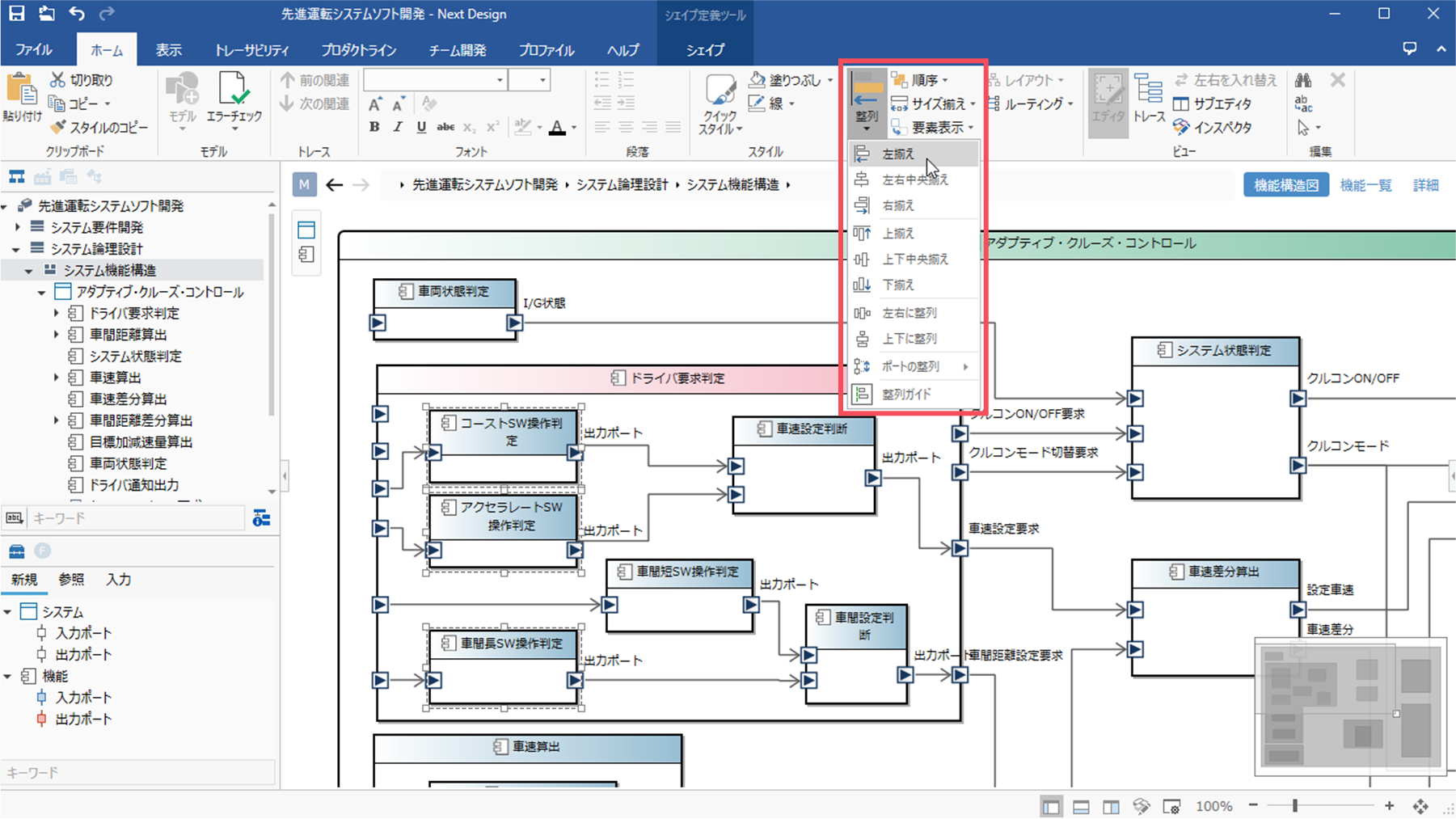
Because it's a design tool you use every day, we prioritize usability. Features include intuitive ribbon-based operations similar to Word and Excel, quick styles that let you preview visual changes, diagram sizing while maintaining overall layout spacing, and drag-and-drop repositioning for document forms and trees— offering an intuitive operational feel throughout.
-
Design while placing inputs from preceding processes side-by-side, ensuring traceability at the same time
You can design naturally by placing requirements or input specifications side-by-side on the left and right screens for comparison.
Traceability to requirements is also clearly indicated by lines on the screen, allowing you to ensure traceability as you design.
While getting a bird's-eye view through model representations, you can also describe individual details in documents.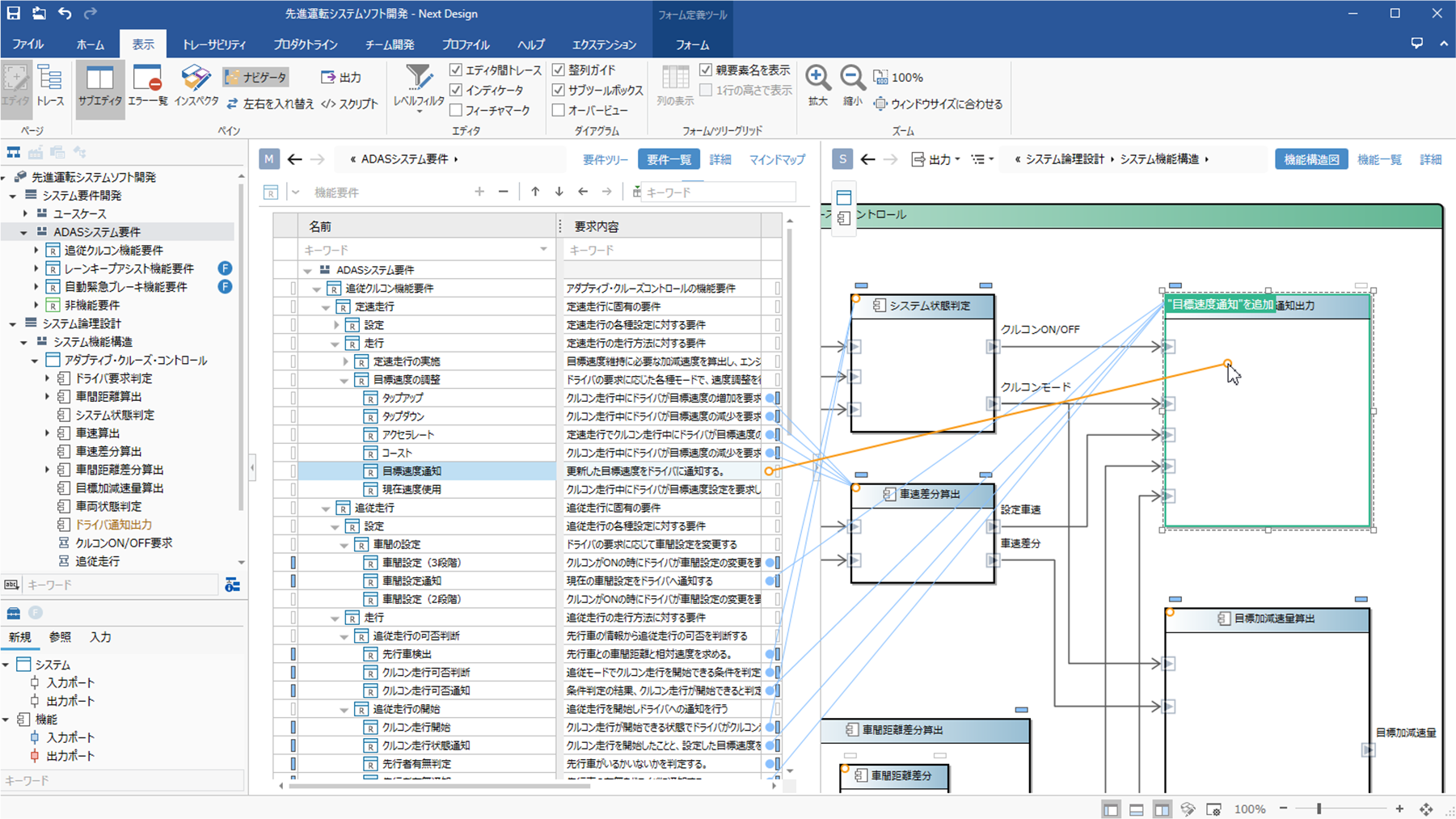
-
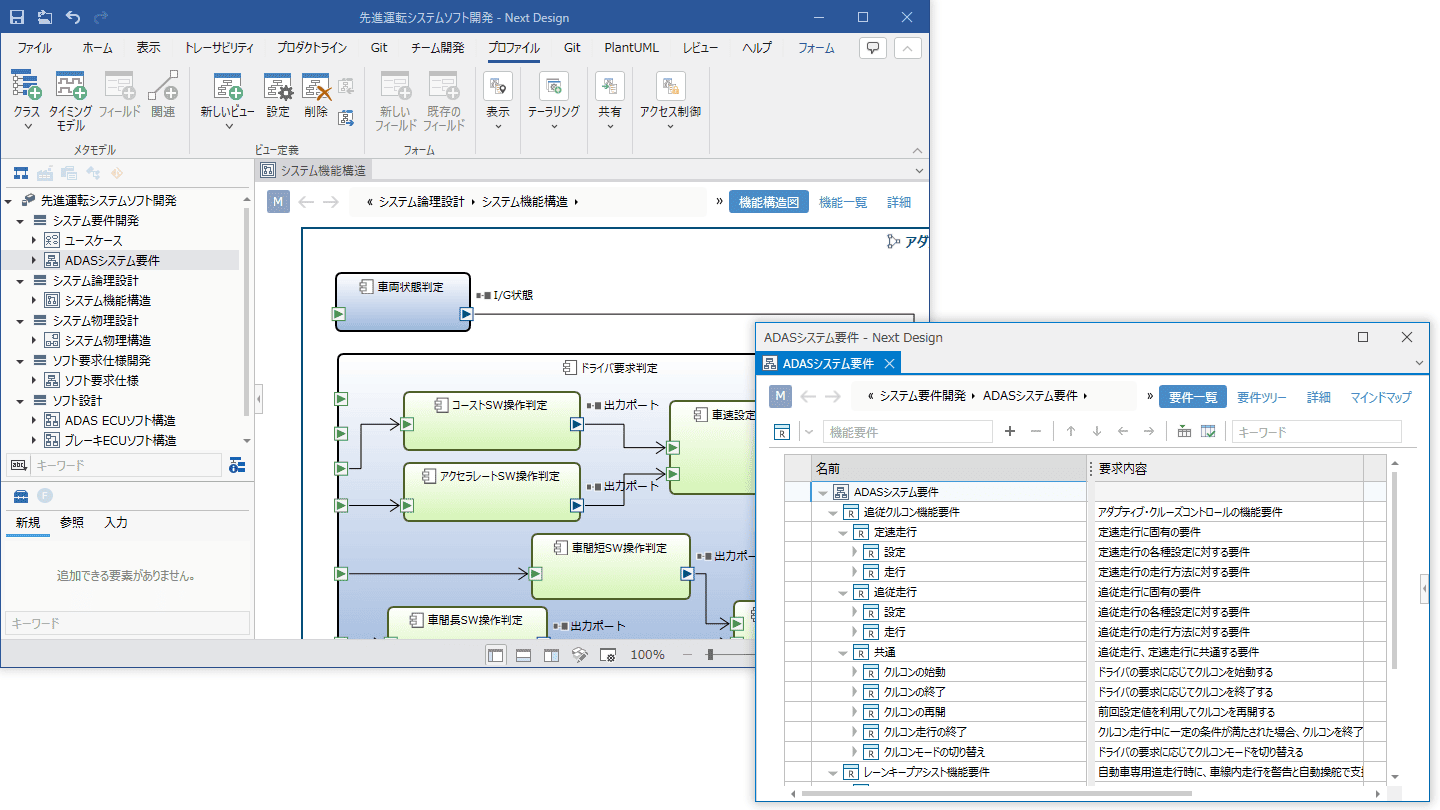
Freely display multiple models with multi-tab and floating views
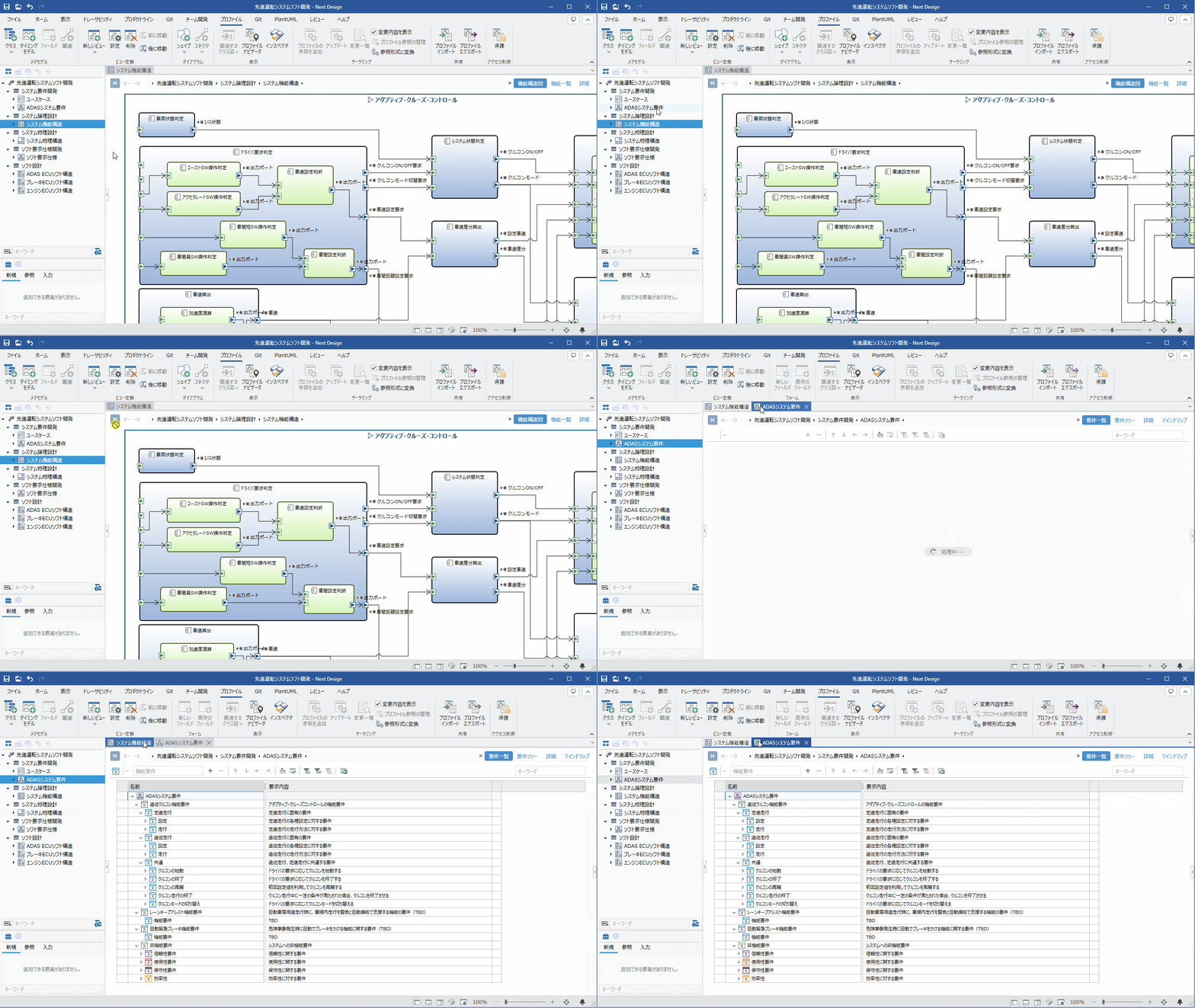
With multiple model tab displays, you can quickly switch and view models from different processes.
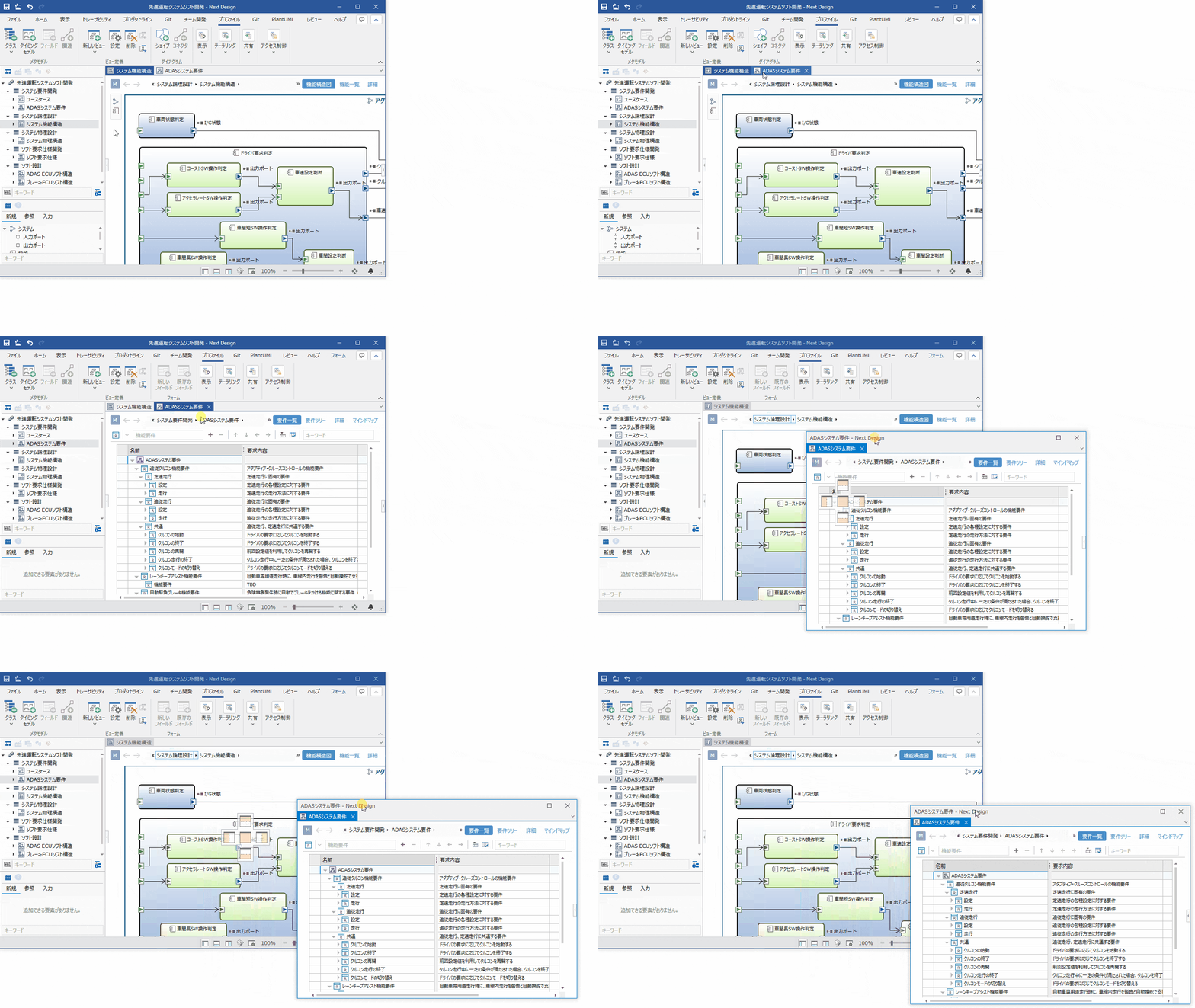
Using floating views allows you to make effective use of multi-display environments.
You can intuitively open models by dragging and dropping them to the top of the editor.
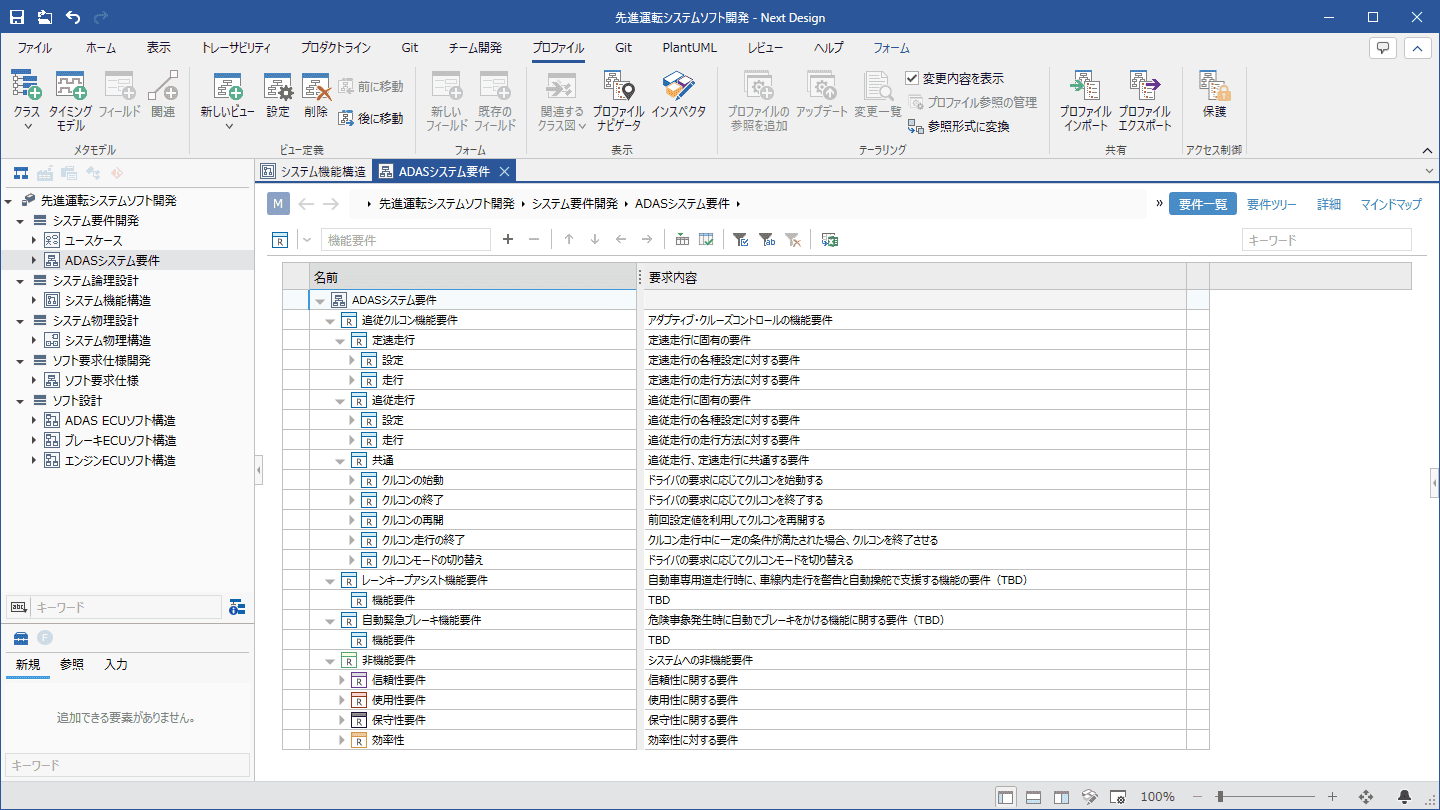
In addition to models, you can simultaneously check trace pages and metamodel class diagrams.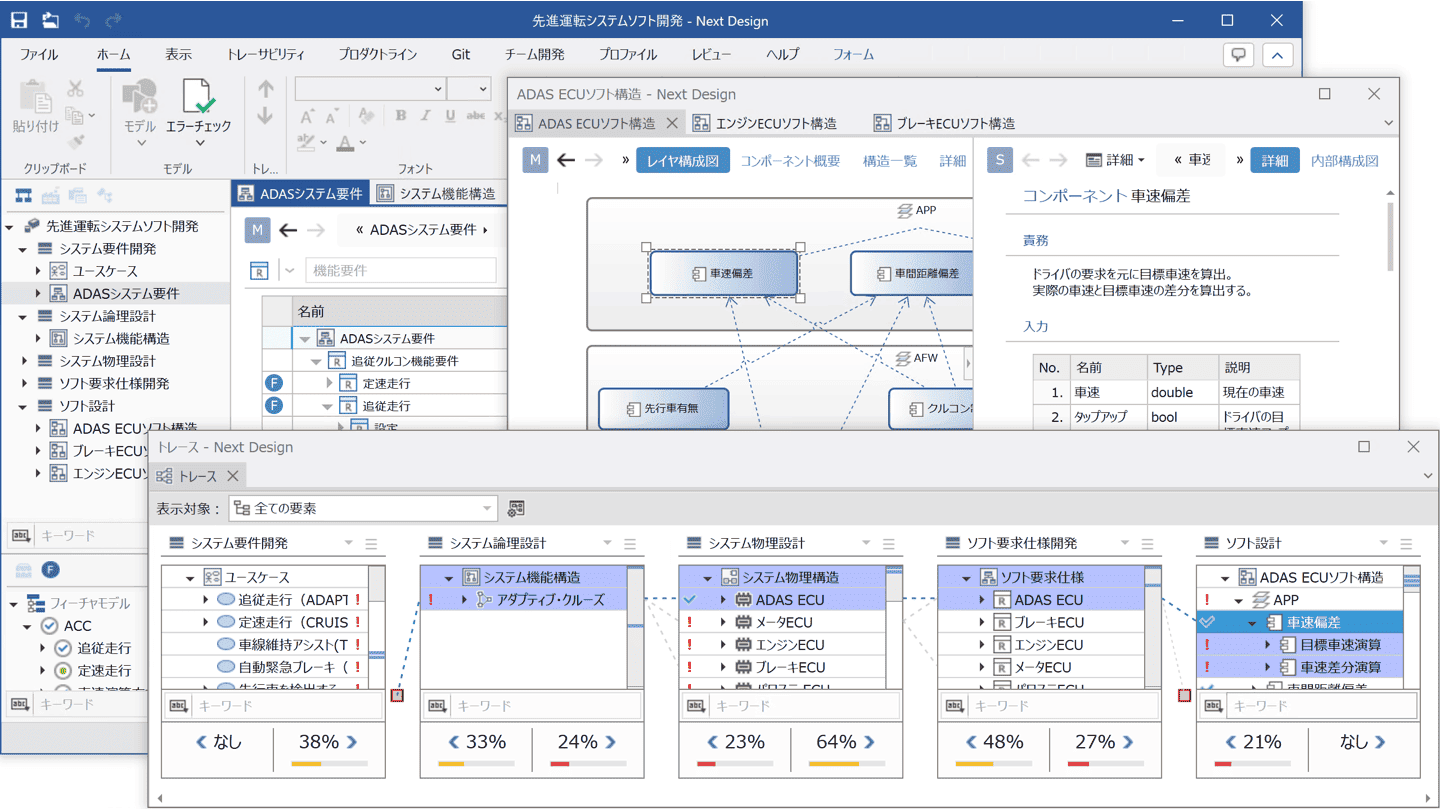
-
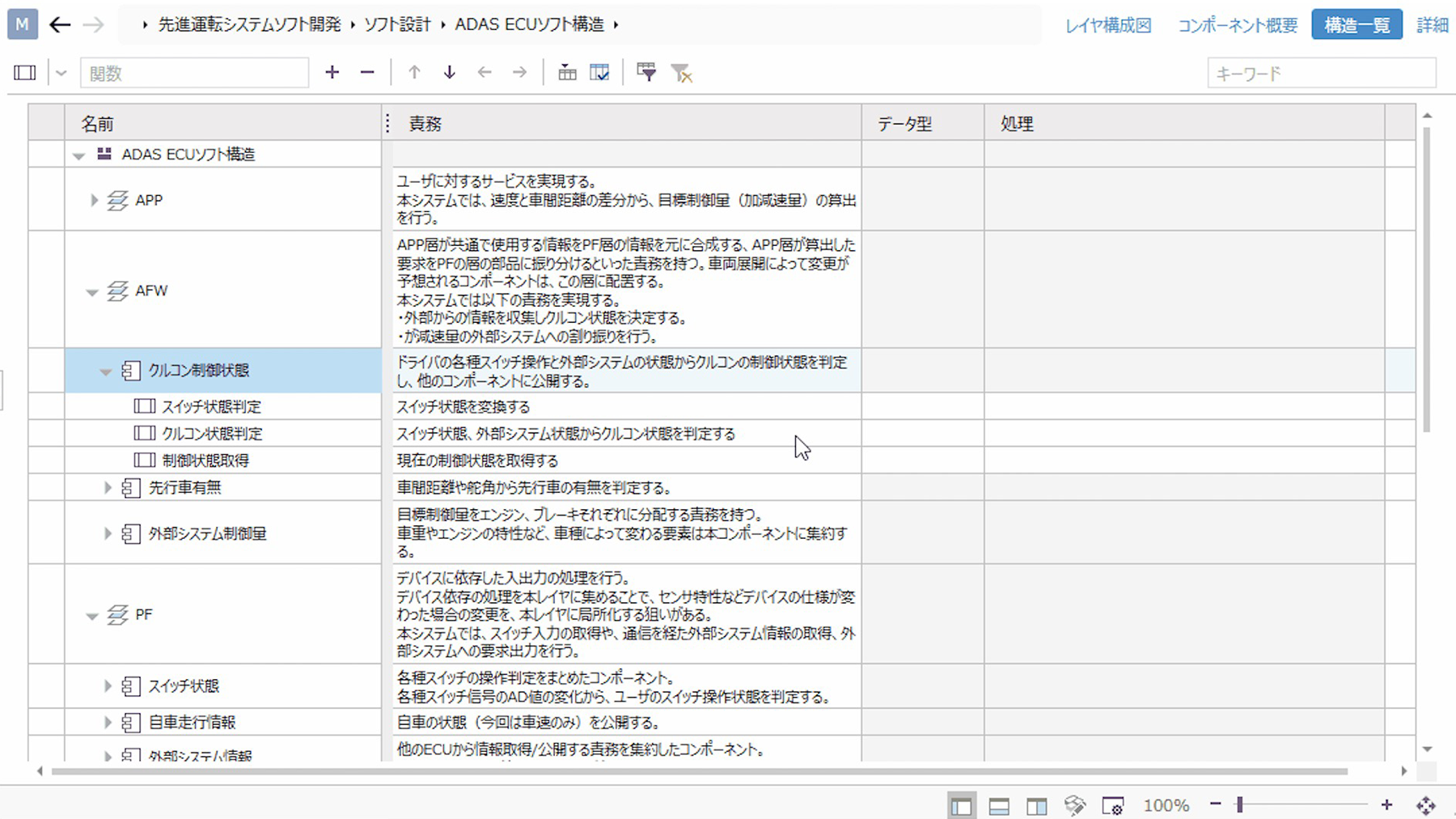
Batch editing of multiple models
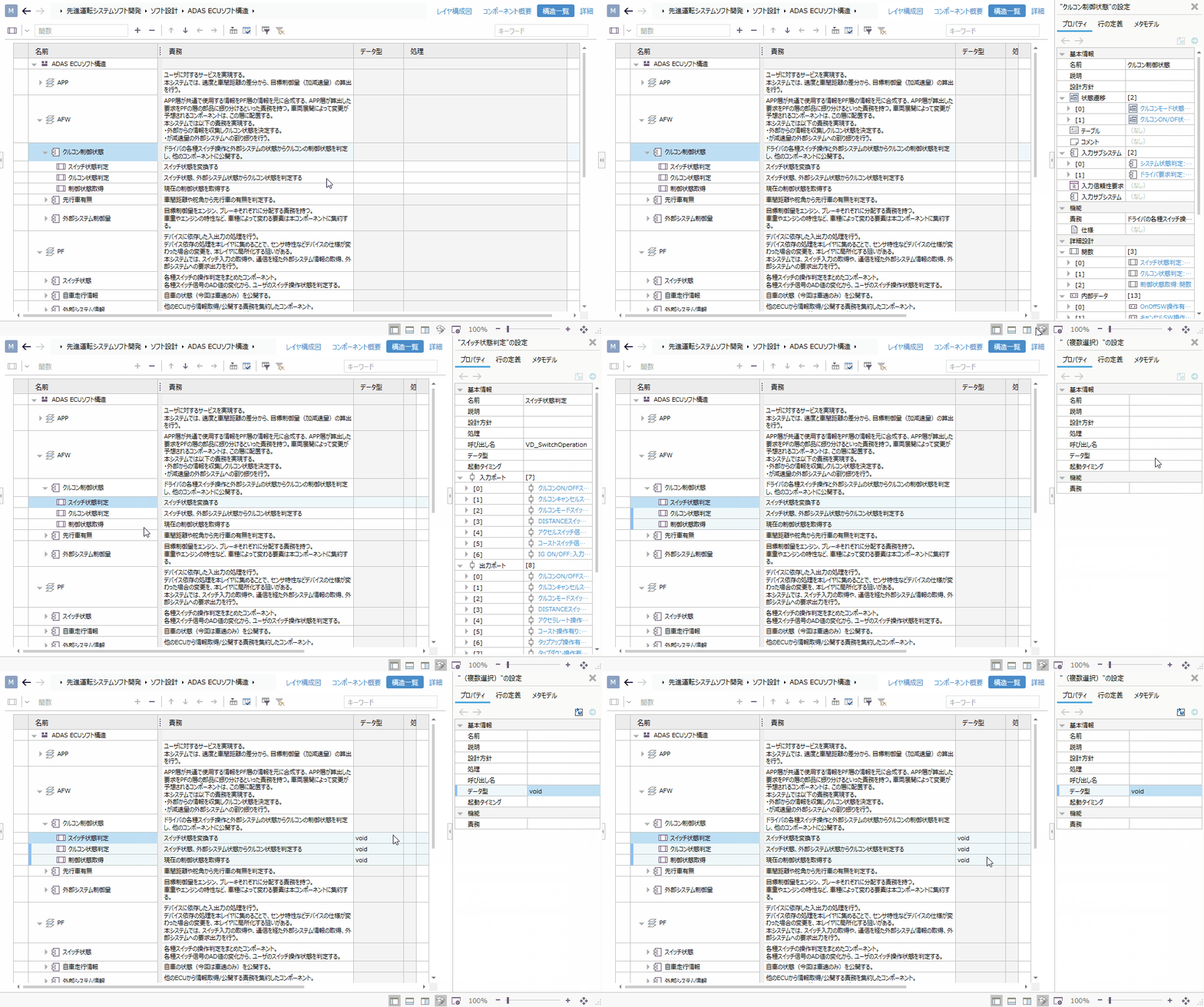
Streamline editing operations by using the inspector to batch-modify model attributes and relationships for design information.
-
Import existing Office documents as-is
Using the rich text format, you can copy and paste Office document content directly while preserving its original appearance.
This makes migrating from existing design documents effortless.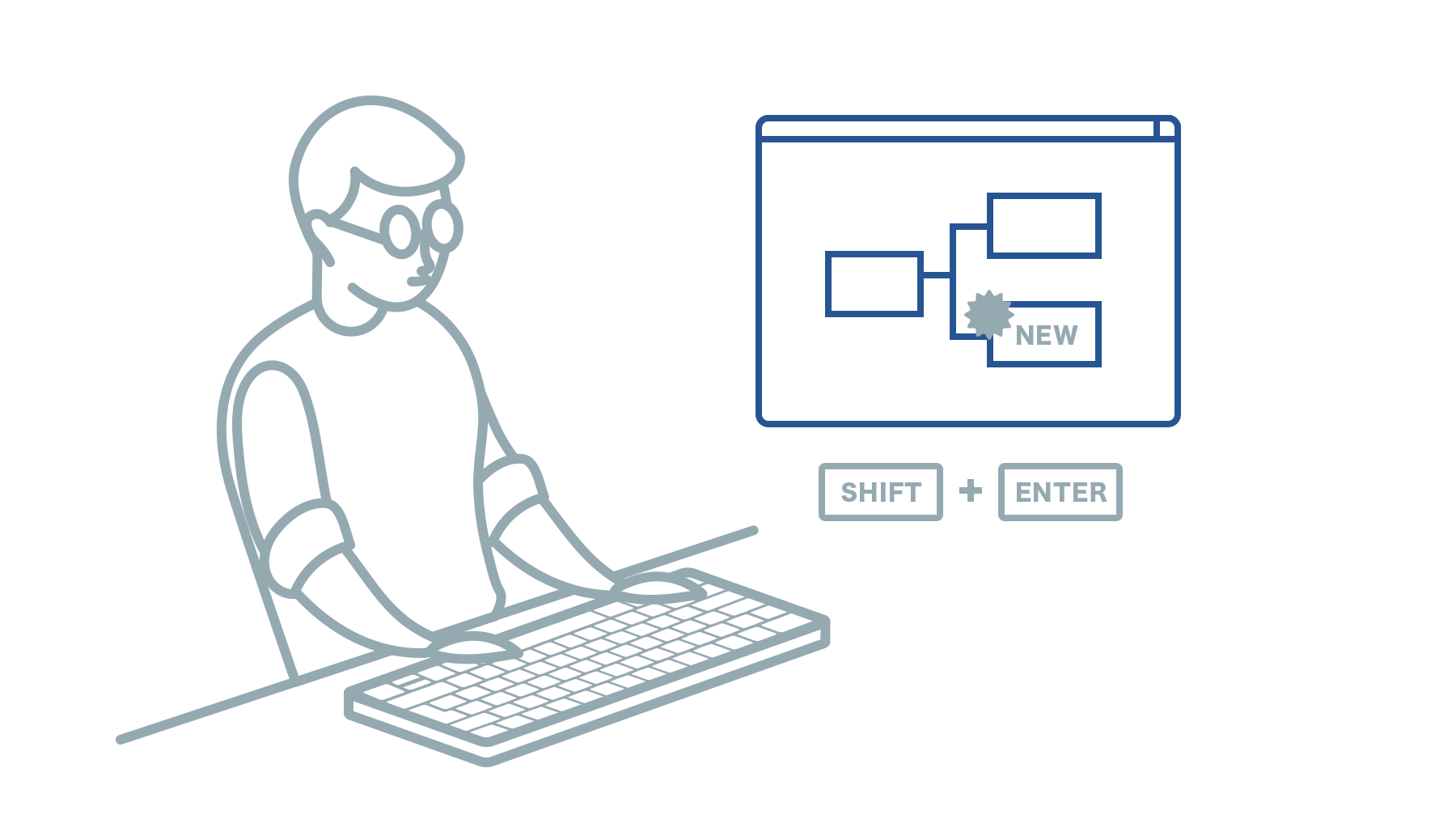
-
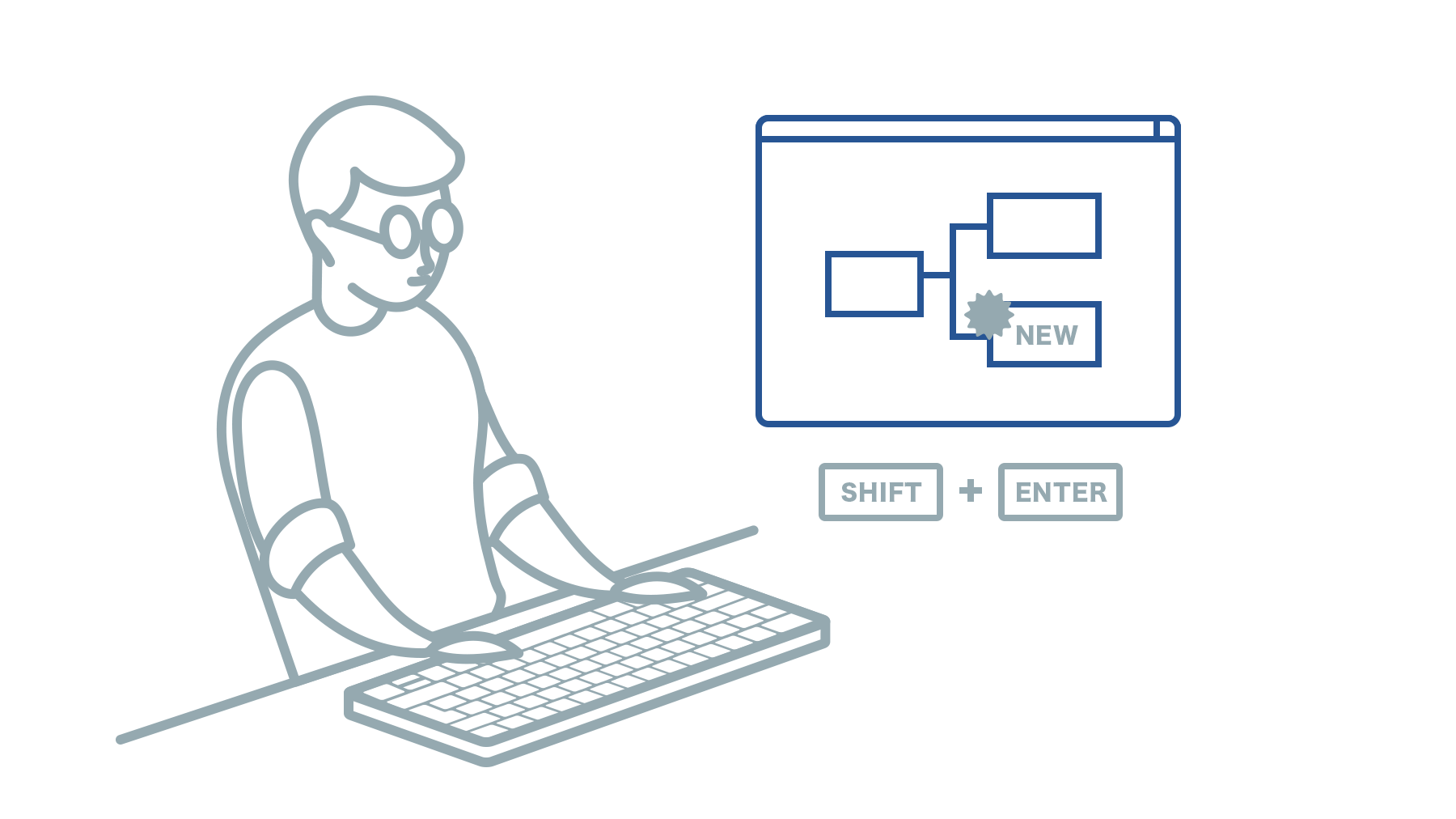
Smooth editing with just a keyboard
Tree views and document views allow you to edit using only the keyboard without switching to the mouse. Everything from adding elements to entering detailed information is completed via keyboard operations.