
Next Design allows you to define content equivalent to traditional design templates as "profiles" for use in design, thereby improving design efficiency and ensuring quality. For example, you can define the structure and notation of design content as profiles for each process or product family, such as requirement definition, design, and testing. In other words, profiles are process assets that aggregate the expertise of the design floor. To start designing in Next Design, you need a profile tailored to the target project. However, you can quickly and easily create the necessary profiles simply by combining pre-componentized profiles. It supports customization of design item names to match the design floor and tracking of profile revisions by the organization, supporting an organizational profile operation cycle.
-
Combining modules to define profiles
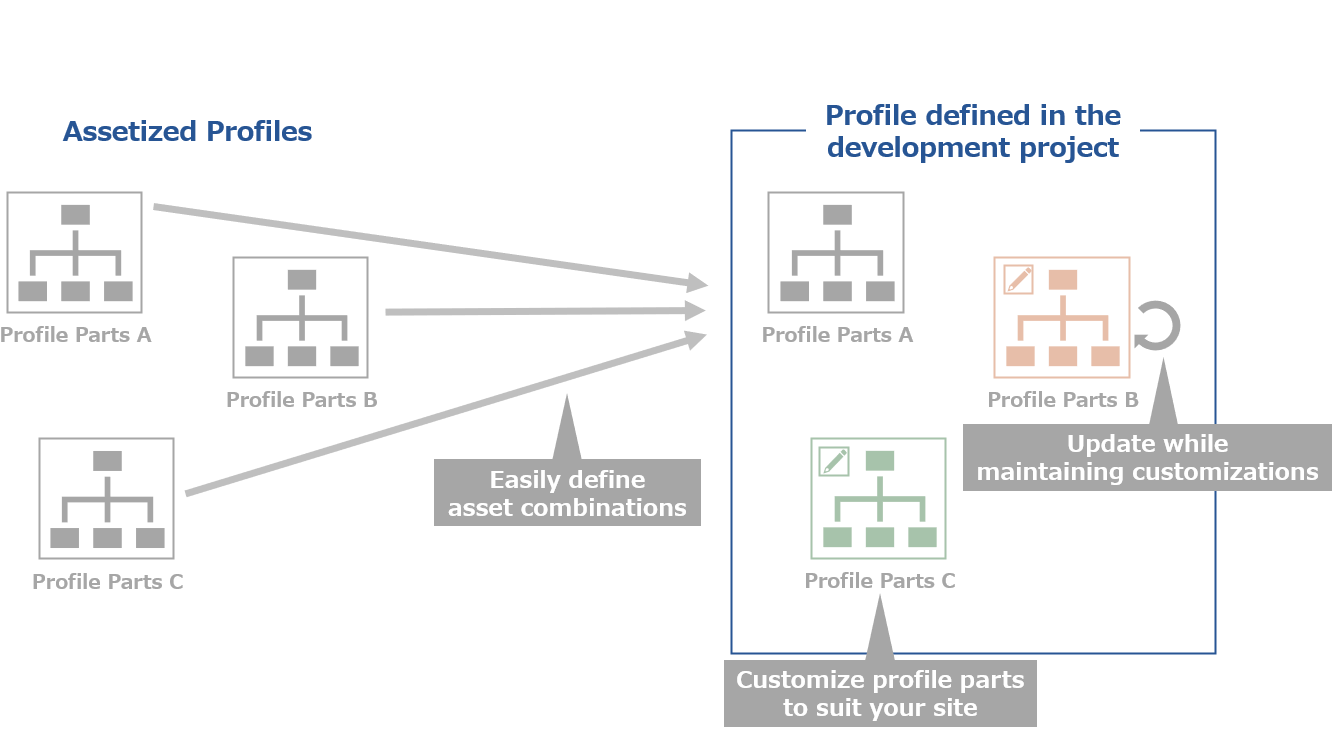
By componentizing and combining profiles for each work process or product family, you can quickly and easily define the profiles required for your project.
Manage multiple versions of a profile and specify the profile version to use for each project.
Profiles can also be published in shared folders, making it easy to distribute profiles across the organization.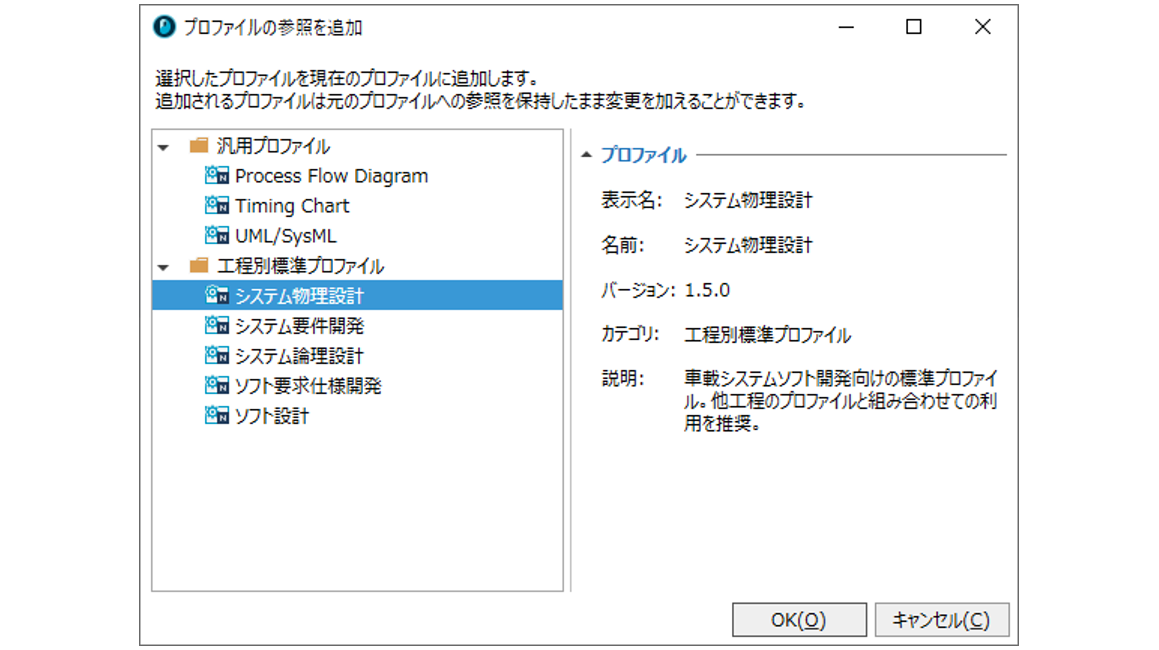
-
Customizing profiles to suit your operations
By reusing componentized profiles across multiple projects while customizing them to fit the local environment, you can absorb differences between projects.
Profile customization allows you to align design item names and select which design information to include or exclude.
It also supports profile merging, allowing you to make flexible profile updates.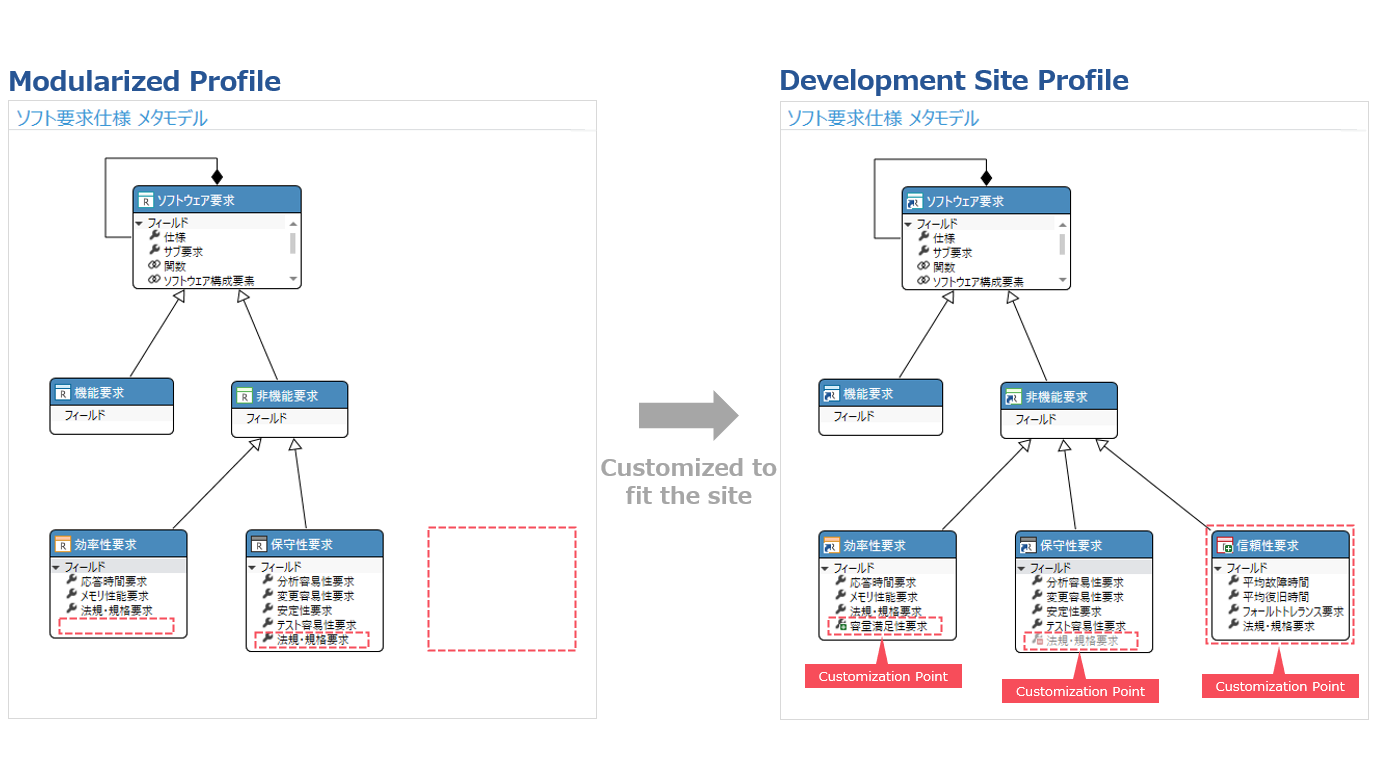
-
Tracking profile revisions while retaining customizations
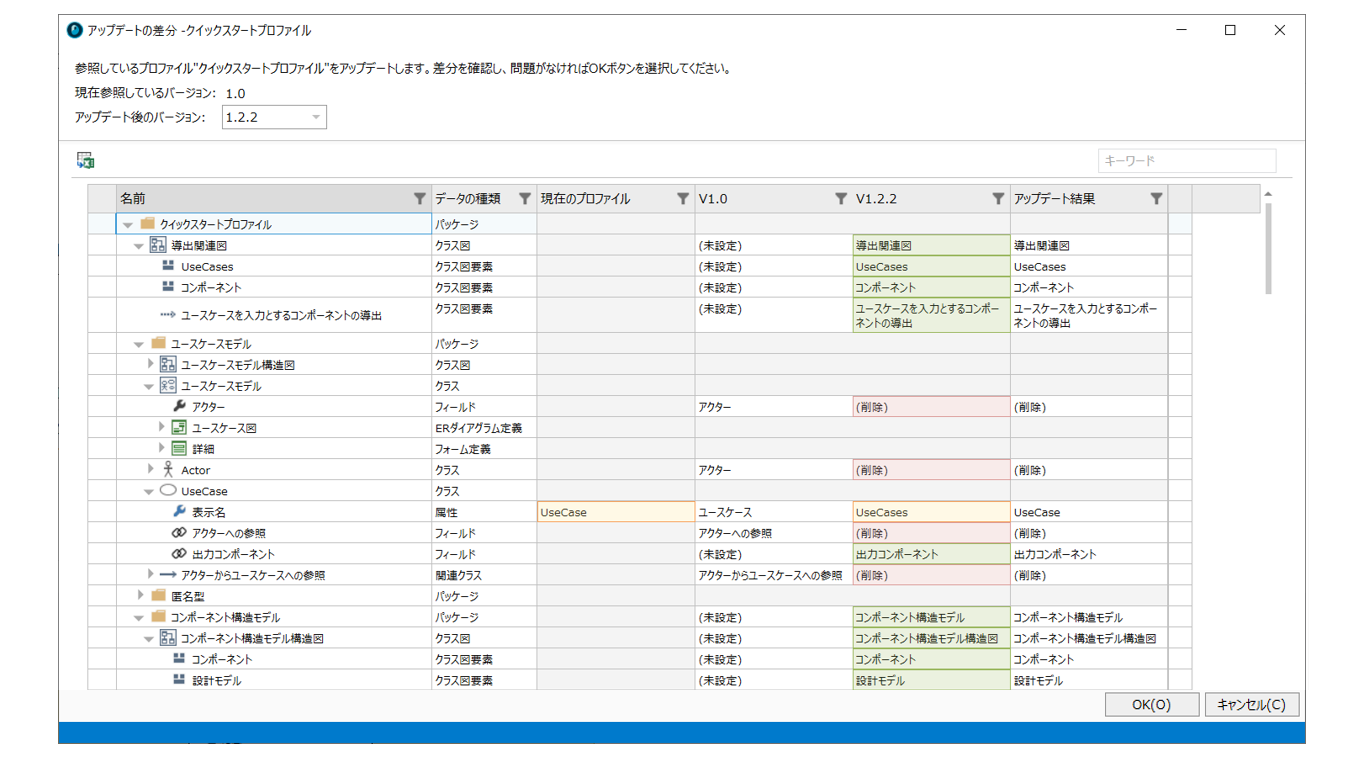
Even when profiles in use are updated to a new version by the organization, you can easily update the local profiles.
You can track and reflect profile updates made by the organization while retaining customizations made for the local environment.
Before reflecting profile updates in a project, you can review profile change diffs to determine the appropriate timing for implementation.