


Releasing "Next Design V4" to Enhance Productivity and Quality in Design Workflows Through Profile Reuse and Tabbed Editors
DENSO CREATE INC. (Headquarters: Naka-ku, Nagoya; President: Hiroaki Miyagawa), a specialized company responsible for advancing software development technologies for the automotive component manufacturer DENSO Corporation, announces the release of the latest version of its system and software design tool, "Next Design V4," starting March 31, 2025. Alongside this release, a free evaluation version will also be available to let users experience the new features.
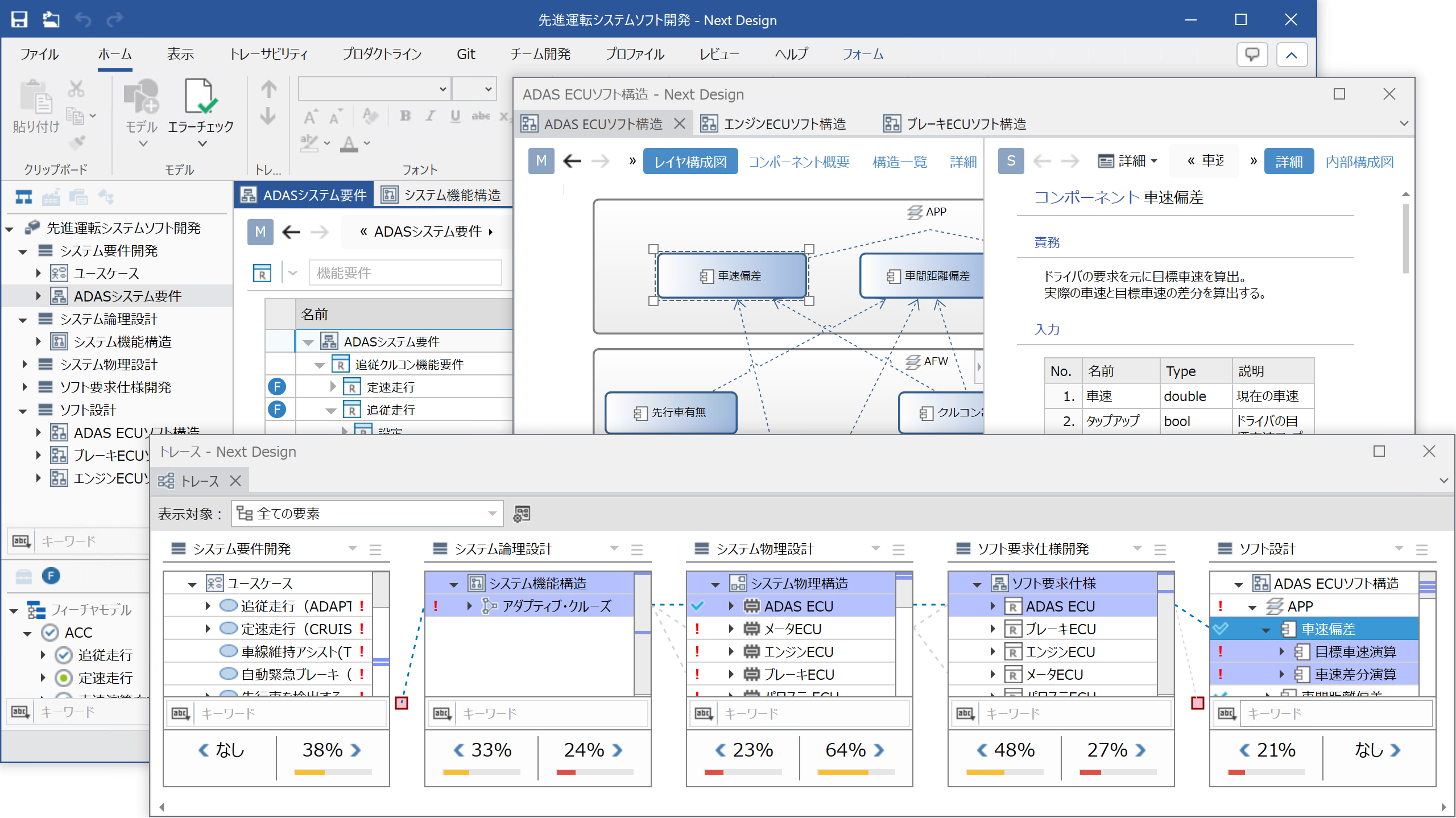
Next Design V4 Screen Image
What is Next Design?
Next Design is a design tool that centrally manages design information in software development and provides an environment for efficient sharing across teams. It resolves challenges such as complex and inefficient development processes caused by fragmented design information and manual tasks. A key feature is its ability to flexibly adapt to diverse, site-specific processes that traditional top-down design tools struggle to support. This tool was developed based on the expertise cultivated while supporting software development at DENSO, an automotive component manufacturer. Since its release in 2020, it has been utilized in software development environments across the automotive industry, including major automakers and DENSO. Thanks to its flexibility and proven track record, it is also widely applied in the development of other embedded software, electrical equipment, and more.
Key Highlights of the Next Design V4 Major Version Upgrade
1. Supporting Design Process Standardization and Flexible Operation (Patent-Acquired Technology)
In Next Design V4, we have enhanced the mechanism for organization-wide utilization of design information templates known as "profiles." This proprietary technology has been recognized for its originality and holds a patent (Patent No. 7648962). Reusing profiles allows you to create necessary project profiles quickly and easily at the start of a project. Furthermore, because profiles can be customized per project or team, you can flexibly operate them according to on-site needs. This provides an environment where organization-wide design processes can be standardized while enabling rapid responses to updates and changes.
2. New Operability for a More Comfortable Design Environment
The introduction of editor tabs and floating views allows you to work more efficiently across multiple tasks. In addition, an intuitive interface makes organizing design information easier, not only boosting operational efficiency but also reducing the burden on designers.
3. Enhanced Support for Large-Scale Projects and Team Development
Improvements to model file hierarchization and traceability page performance allow you to divide large projects, manage configurations by group, and effortlessly review project-wide traceability. Additionally, new features for importing design information from other projects and enhanced Git integration support efficient collaborative development across multiple teams.
For details on the V4 major version upgrade, please refer to here.
Benefits of Implementing Next Design
Implementing Next Design can be expected to standardize design information, improve efficiency by reducing manual tasks, and enhance design accuracy. It allows for flexible application tailored to the site, regardless of project scale or industry.
Pricing and Operating Environment
Price (Annual Subscription):
- User License from 66,000 JPY (72,600 JPY including tax)
- Floating License from 264,000 JPY (290,400 JPY including tax)
Operating Environment:
- Windows 10, Windows 11