


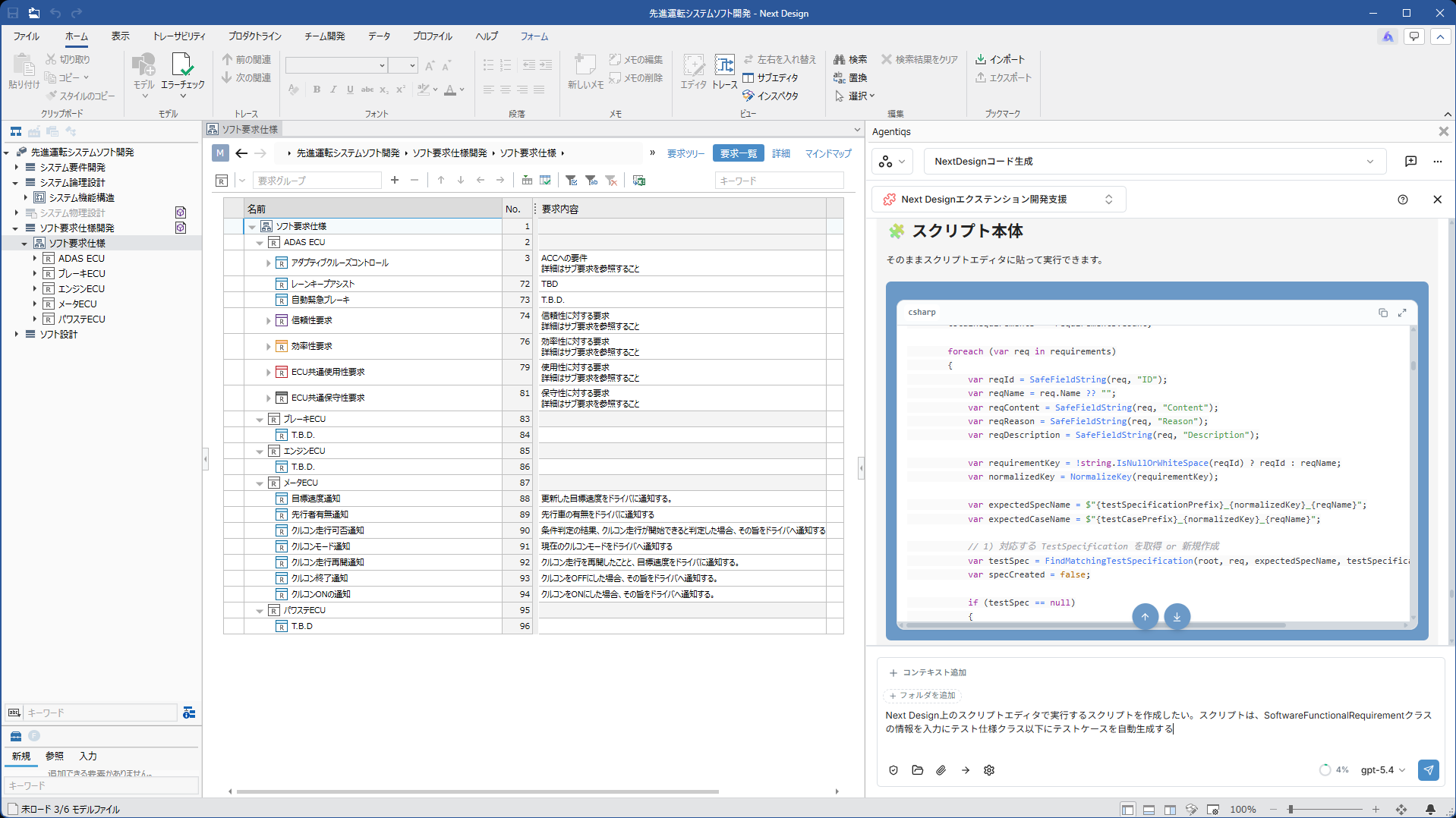
Next Design manages design information as models with structure and relationships, allowing this information to be utilized by AI agents. By using the Next Design AI Tool Kit, AI agents can reference and edit design information within Next Design, supporting various design tasks such as creating and reviewing design models and defining profiles.
You can operate Next Design from the AI agents you use daily, or proceed with your design while conversing with AI within Next Design. By having humans judge design intent and content validity while AI assists with organizing, creating, and verifying information, we drive efficiency and quality improvements in design activities.
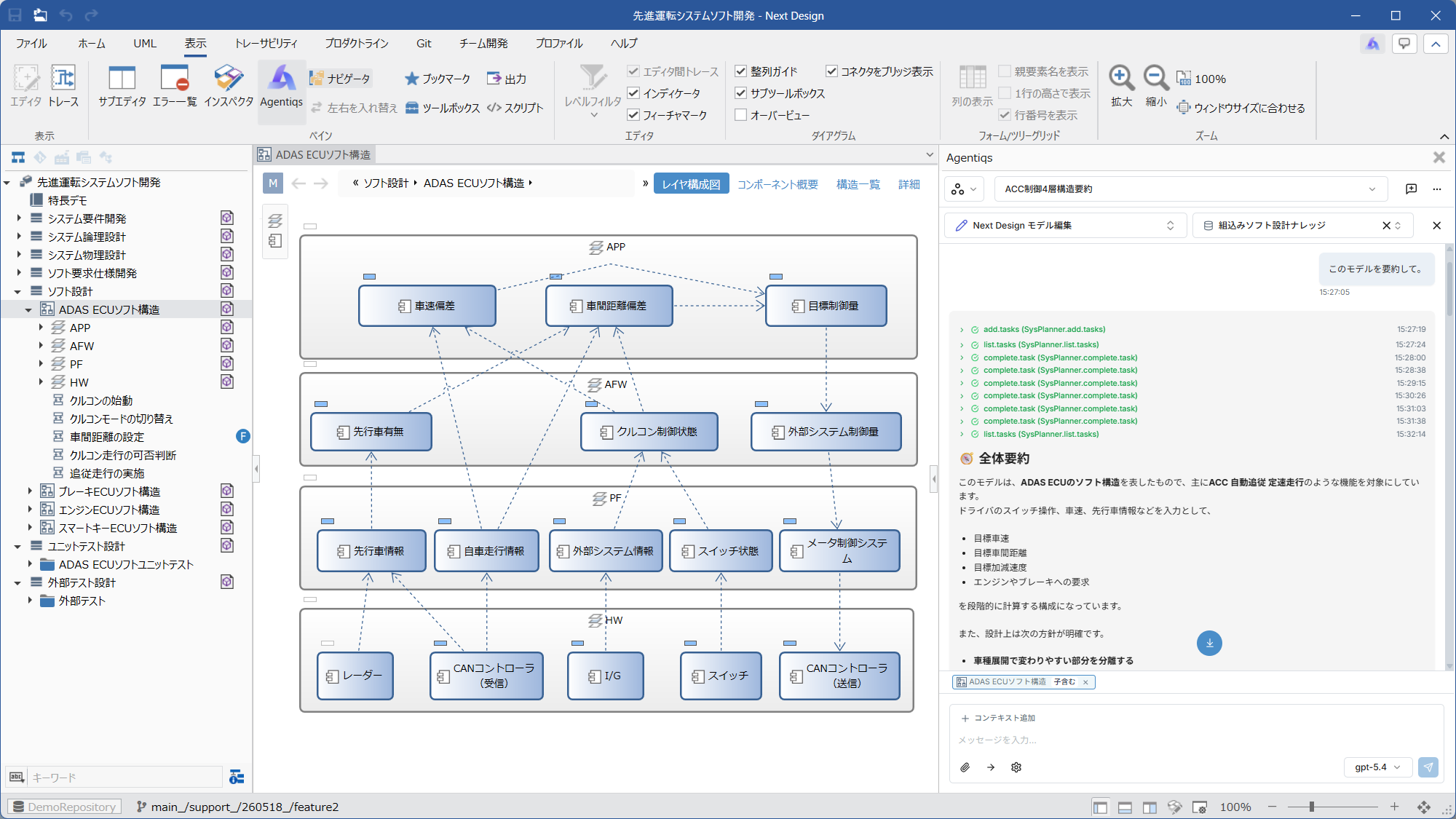
Next Design AI Tool Kit
The Next Design AI Toolkit includes "Next Design MCP," which allows AI agents to access Next Design design information, and dedicated Skills that provide AI agents with the knowledge and procedures necessary for working with Next Design. This allows users to leverage the structured design information accumulated in Next Design using the AI agents they normally use.
For more details on the Next Design AI Toolkit, please see below.
-
Design information accumulated in Next Design serves as the foundation for AI utilization
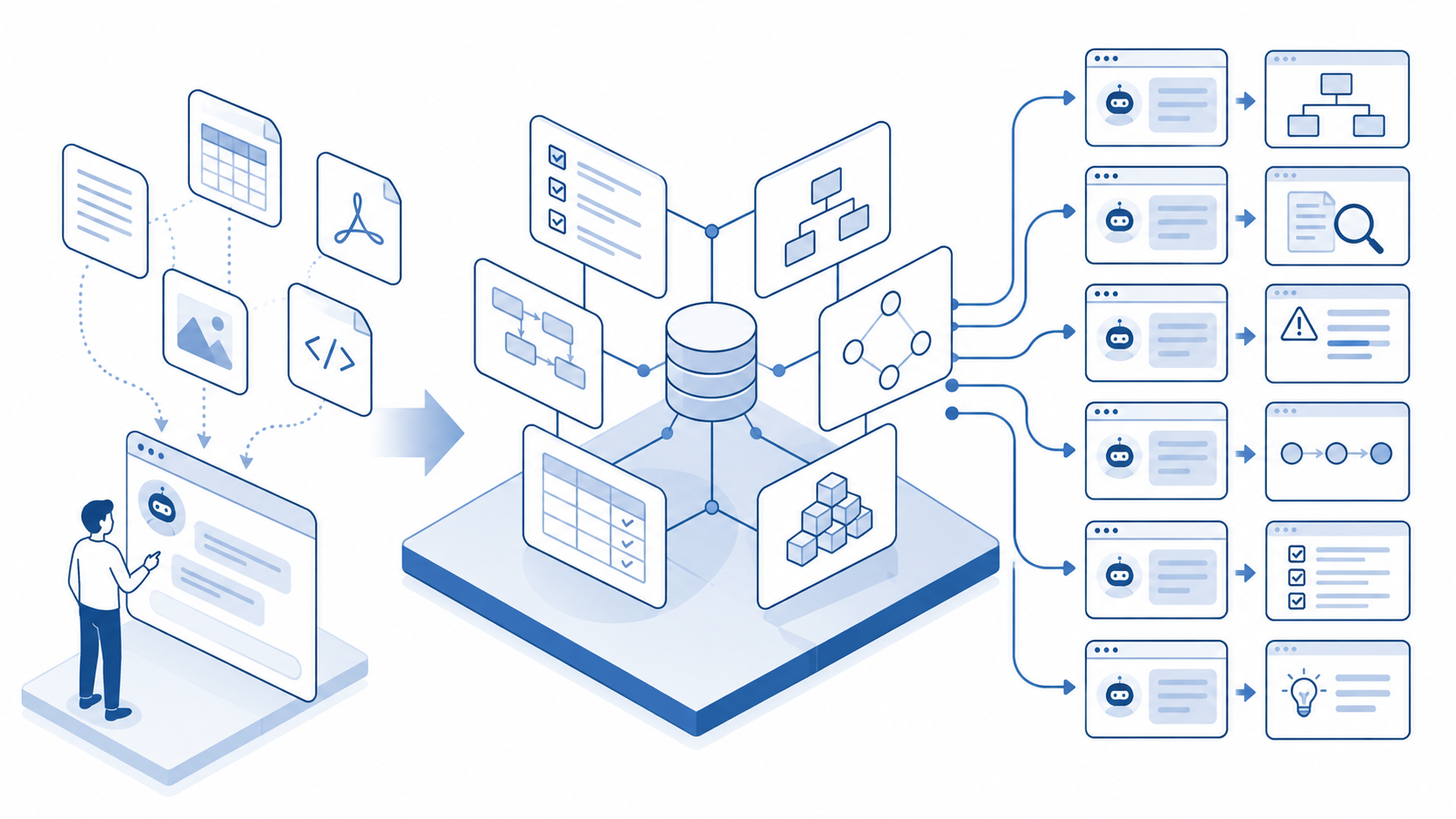
Next Design MCP(*) enables compatible AI agents to reference and edit Next Design design information and model relationships. AI agents support model creation, editing, review, checking, and verification while referencing design information on Next Design. Designers can review the results created and proposed by AI within Next Design and proceed with their work while making adjustments to match their design intent.
There is no need to manually import AI-generated text or files as design information into Next Design. Because AI can directly input and output Next Design's design information, conversation content can be reflected directly into design deliverables.
*MCP (Model Context Protocol) is a mechanism for connecting AI agents with external tools and data. By using Next Design MCP, you can reference and edit Next Design design information from compatible AI agents.
-
Structured design information makes it easy for AI to utilize
In Next Design, design information is not managed as mere documents, but is structured and managed as models based on metamodels. Information such as requirements, designs, tests, and their relationships and traceability can be managed on Next Design.
- AI agents can also leverage the structure and connections of design information to support model creation and reviews.
- A key feature is that AI can utilize structured design information, rather than simply reading plain text.
By managing design information in a format that is easily handled by both humans and AI, you can integrate AI usage into various design activities, including model creation, reviews, verification, and modifications.
-
AI that knows Next Design, supporting specialized work
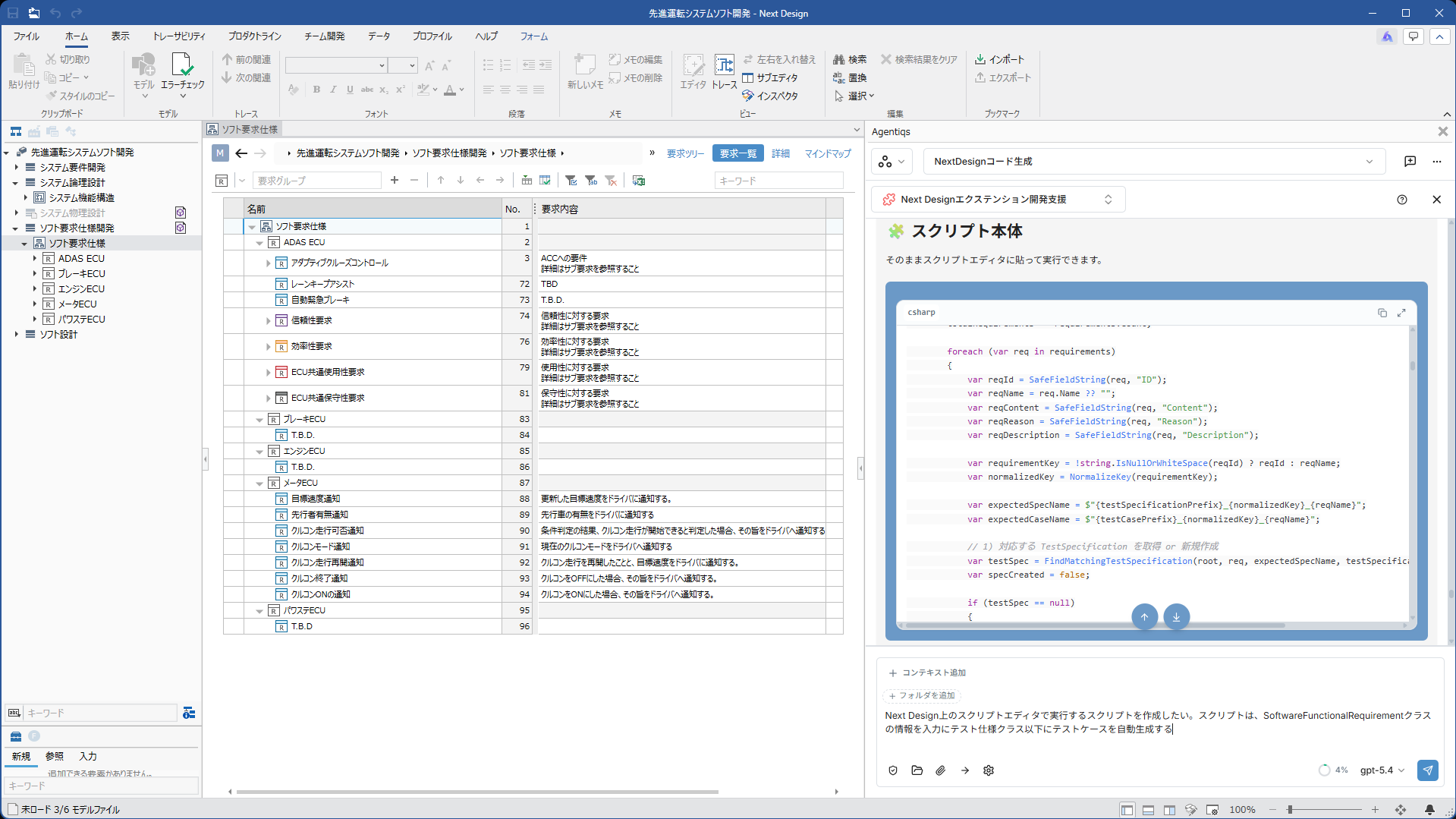
In addition to Next Design MCP enabling AI agents to handle Next Design design information, Next Design-specific Skills allow AI agents to understand "how to proceed with design work on Next Design." By leveraging Next Design knowledge and workflows, they support more concrete tasks.
- From defining metamodels (profiles) to creating and modifying models, the AI provides full support.
- You can also handle relationships and expressions in design information, such as setting up and analyzing traceability or automatically arranging diagrams.
- Based on requirements specifications and existing design information, the AI supports the creation of models such as use cases, scenarios, and test cases.
- Review design information in Next Design against review perspectives and required items, supporting the discovery of omissions and inconsistencies.
Skills are a mechanism that provides AI agents with the knowledge and procedures required for specific tasks. Next Design-specific Skills provide AI with workflow guidance and expert knowledge for working with Next Design.
-
Smoothly migrate existing design assets into Next Design models
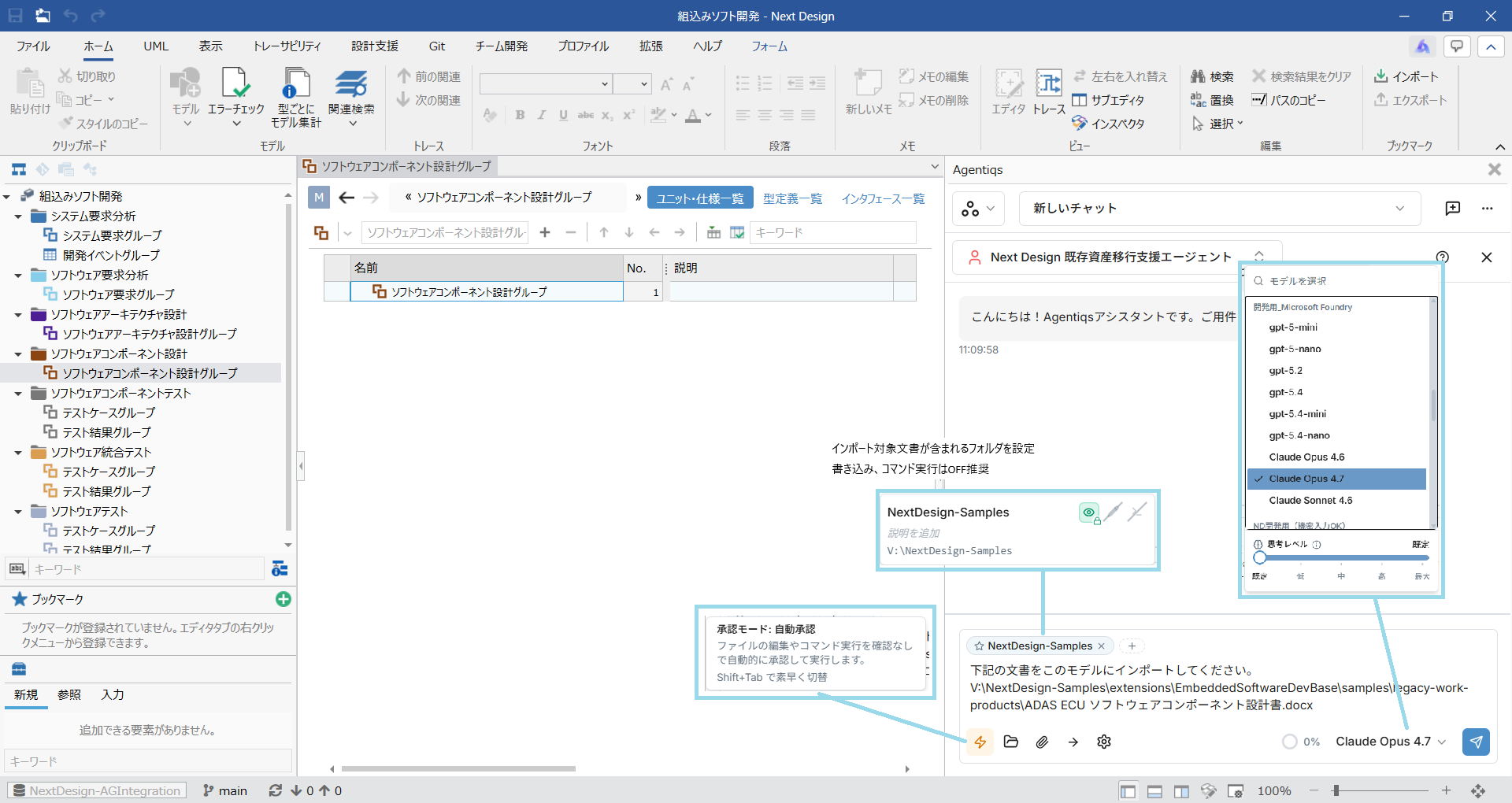
- Read existing design assets previously managed in Word, Excel, PDF, or similar formats, and support their migration to Next Design models.
- The AI interprets the content of the documents and organizes and creates them as models aligned with your Next Design profile.
- While checking the original documents against the created models, the AI also supports confirming and correcting omissions and missing information.
-
Supporting extension development
With Next Design-specific Skills, AI agents utilize Next Design knowledge and operating procedures to support more specialized tasks. You can discuss metamodel and view structures while conversing with AI to build profiles tailored to your company's development processes.
- Dedicated Skills allow the AI to understand Next Design's API and development workflows, supporting the creation of extensions.
- Simply by communicating what you want to achieve, the AI creates a foundational framework for the extension according to your requirements. By reviewing the results and instructing modifications as needed, users can develop target extensions without having to write code.
A key feature of Next Design-specific Skills is that they not only let AI operate Next Design, but also support how you approach your design work using Next Design.
-
Directly utilize Next Design's design information from your everyday AI
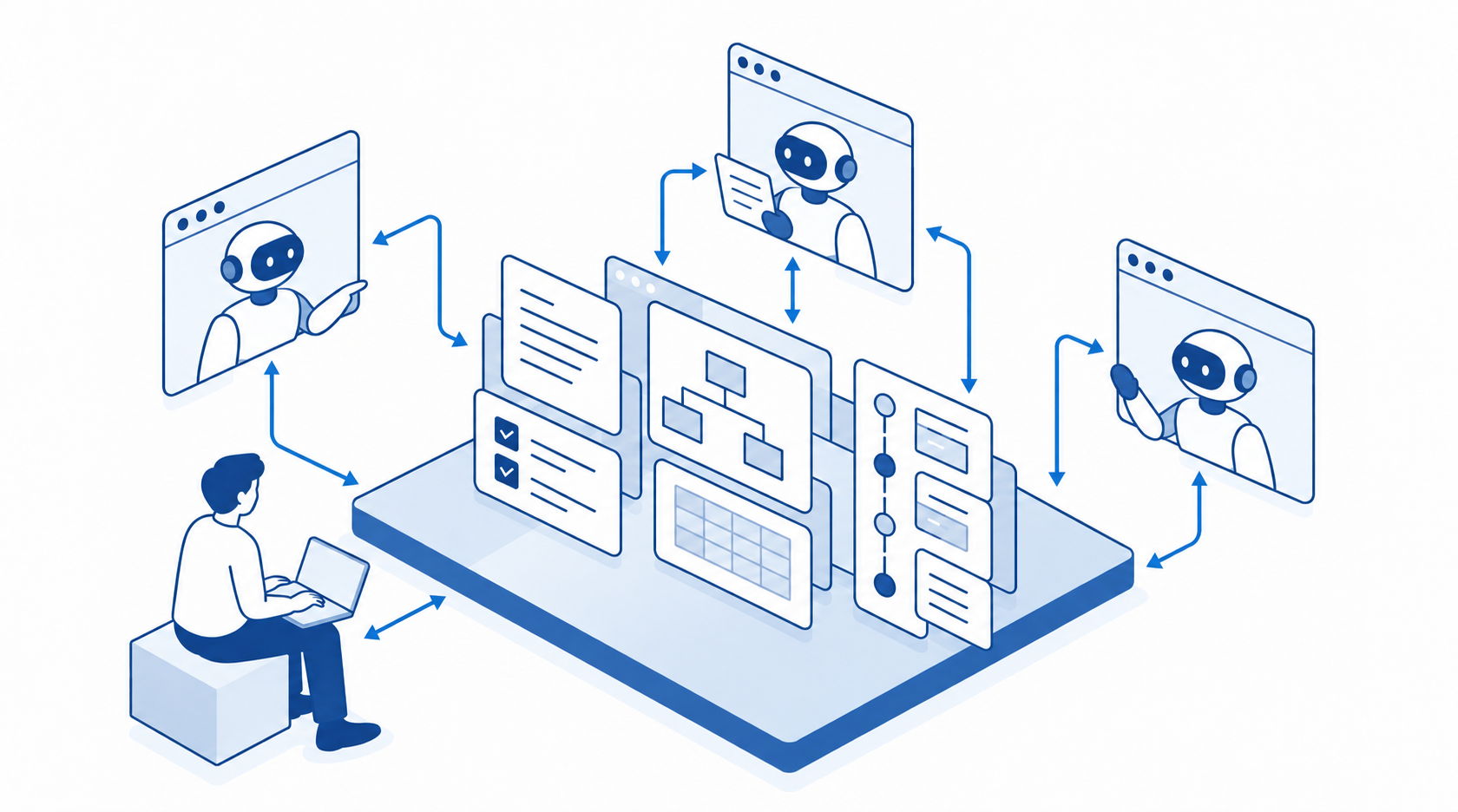
With Next Design MCP, compatible AI agents can reference and edit Next Design's design information. Through your conversation with the AI, you can utilize Next Design models, metamodels, traceability, diagrams, and more to create and edit models, as well as check and verify design information. For example, based on requirements and design information registered in Next Design, you can create initial model drafts, investigate relationships between models, and check for missing design information or inconsistencies. By combining Next Design with the AI environments you use daily, such as Claude or GitHub Copilot, you can leverage AI in your daily design work.
You can choose how to integrate Next Design and AI agents to match your current AI environment and development style.
-
Directly utilize Next Design's design information from DC Agentiqs
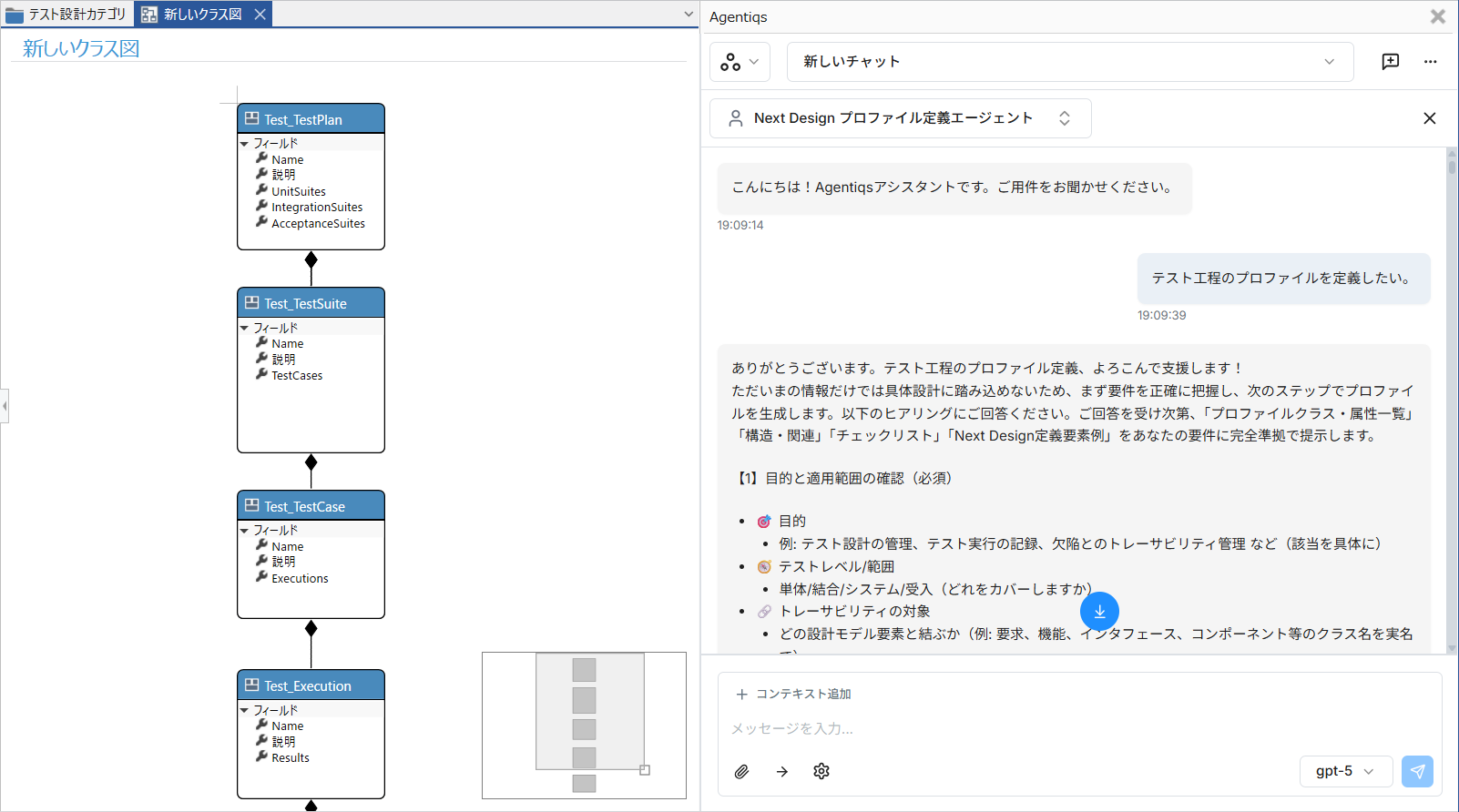
- DENSO CREATE's AI agent platform, "DC Agentiqs," allows you to use Next Design with Next Design MCP and dedicated Skills pre-configured.
- Engage in a conversation from the integrated AI chat within the Next Design interface while utilizing the design information currently being edited.
- Individual configuration of MCP and Skills is unnecessary, making updates much easier to manage.
Terms of Use and Additional Fees
The Next Design AI Tool Kit and the Next Design features of DC Agentiqs are available at no additional cost to Next Design users. Subscriptions and usage fees for the AI services and LLMs used are required separately. When using LLMs through DC Agentiqs, an API key for the respective LLM is required.