


NEW FEATURES New features in Next Design V5
Bringing digital transformation and AI utilization in embedded software development closer to hand
~ Bringing the technology and expertise of embedded software development cultivated in the automotive industry to your doorstep ~
Based on the technology cultivated in automotive embedded software development environments, and incorporating the expertise we have accumulated on the front lines of in-vehicle software development, we have condensed it into Next Design V5 so that it can be applied across any industry.
We now offer new packages that are immediately usable for embedded software development, facilitating adoption across a wide range of development environments. Furthermore, design support through AI integration and numerous feature improvements reflecting user feedback make this a major version update capable of delivering high productivity right from the initial rollout.
Next Design V5 translates the methodologies and AI technologies required in embedded software development into design capabilities that anyone can use, significantly advancing your development operations.
Quick Start with Embedded Software Development Packages
AI-Assisted design for efficient, high-quality embedded software development

Improving Practicality by Reflecting User Feedback
What is Next Design?
Next Design is a next-generation design tool for system and software development.
By aligning "metamodels" (which define the structure and relationships of design information across phases) and "view definitions" (diagram and document representations for these) with the perspectives and purposes of the development environment, you can use it as a dedicated design tool optimized for your own processes and domain, tailored precisely to your workflow.
V5 Features
Quick Start with Embedded Software Development Packages
To ensure that anyone can start embedded software development designs smoothly, we have newly prepared a set of packages that are ready for immediate use in the field.
This significantly reduces the time and cost required for setup upon introducing Next Design, allowing you to experience the implementation benefits in your design environment much faster.
-
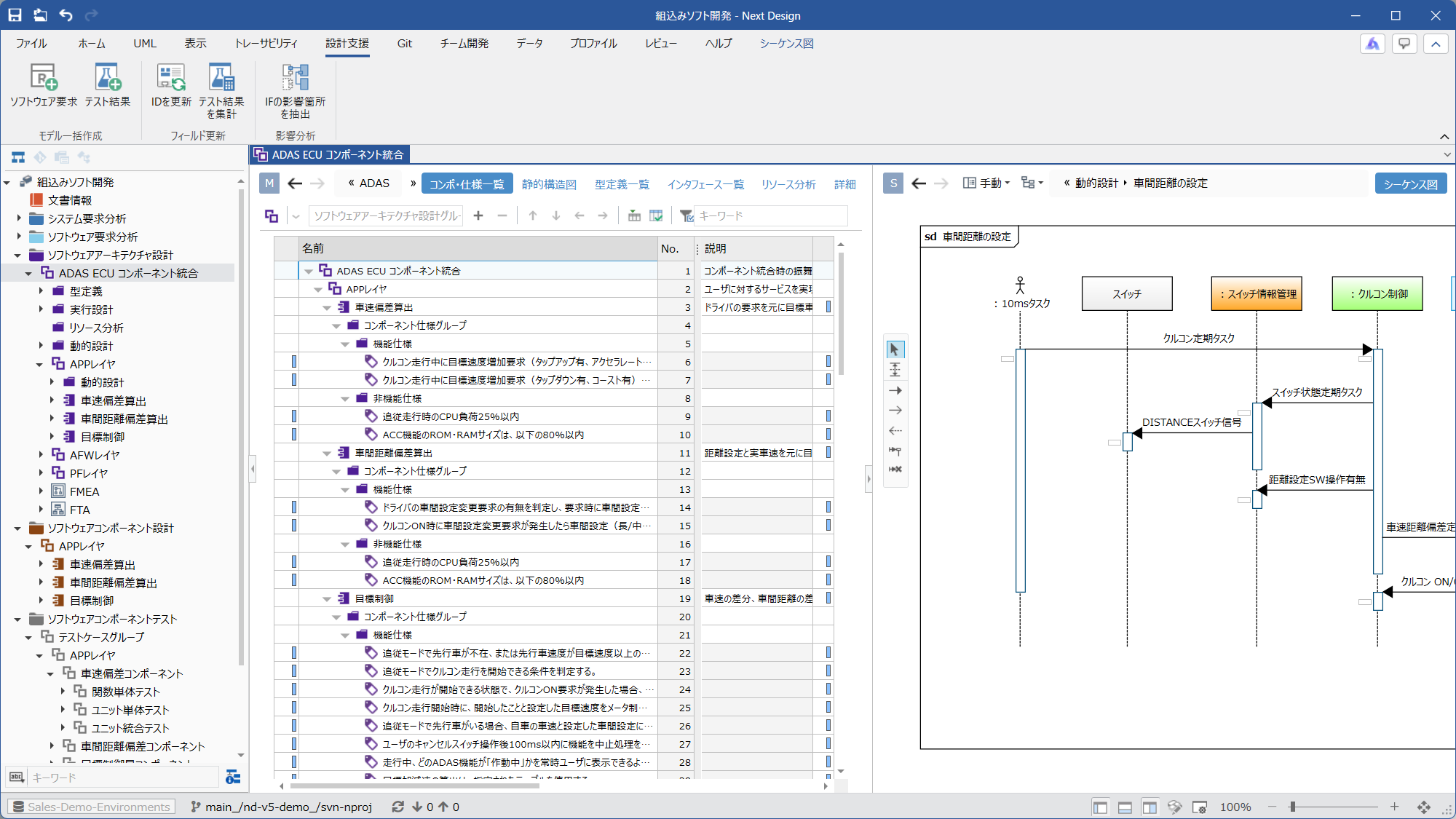
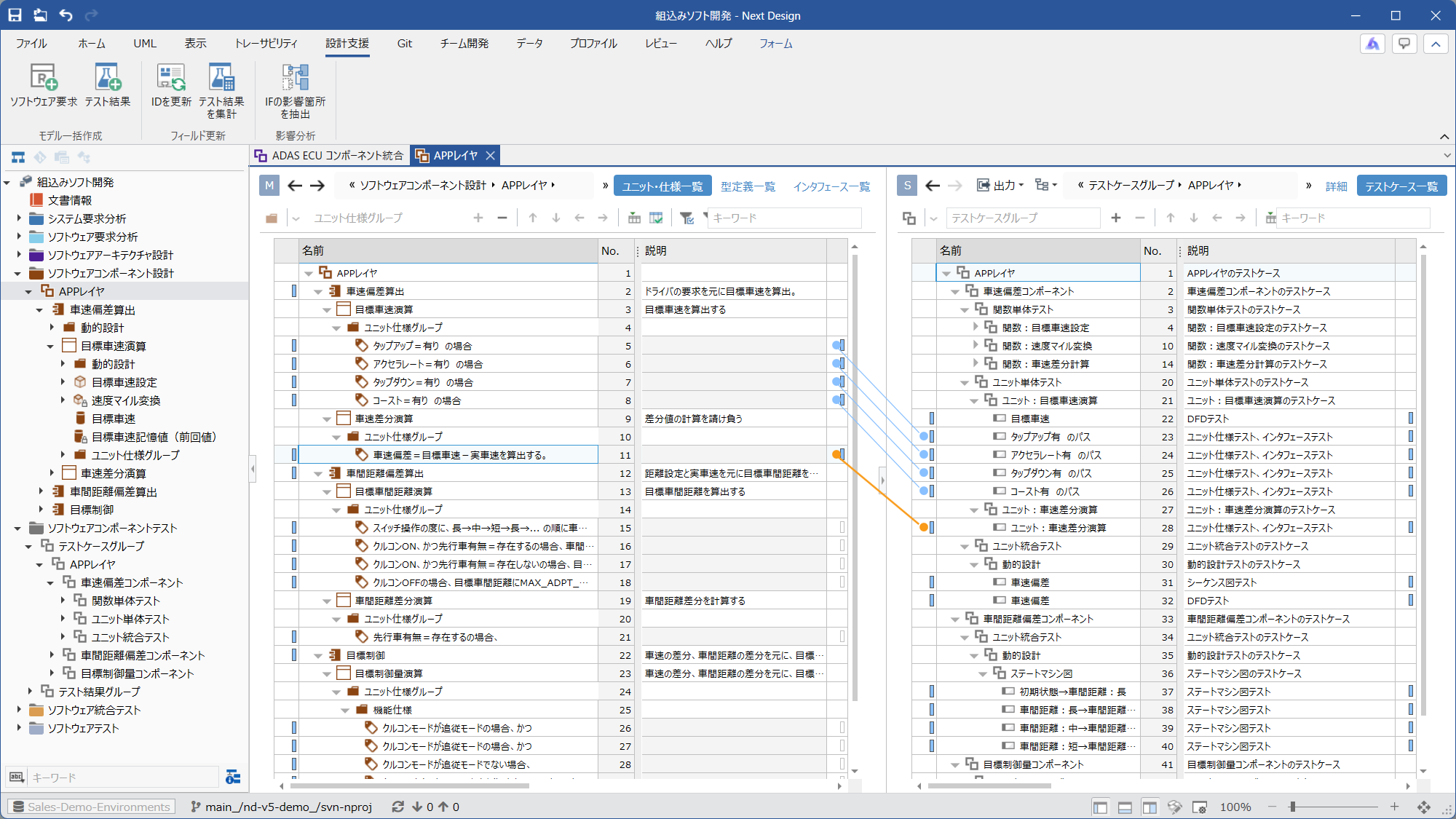
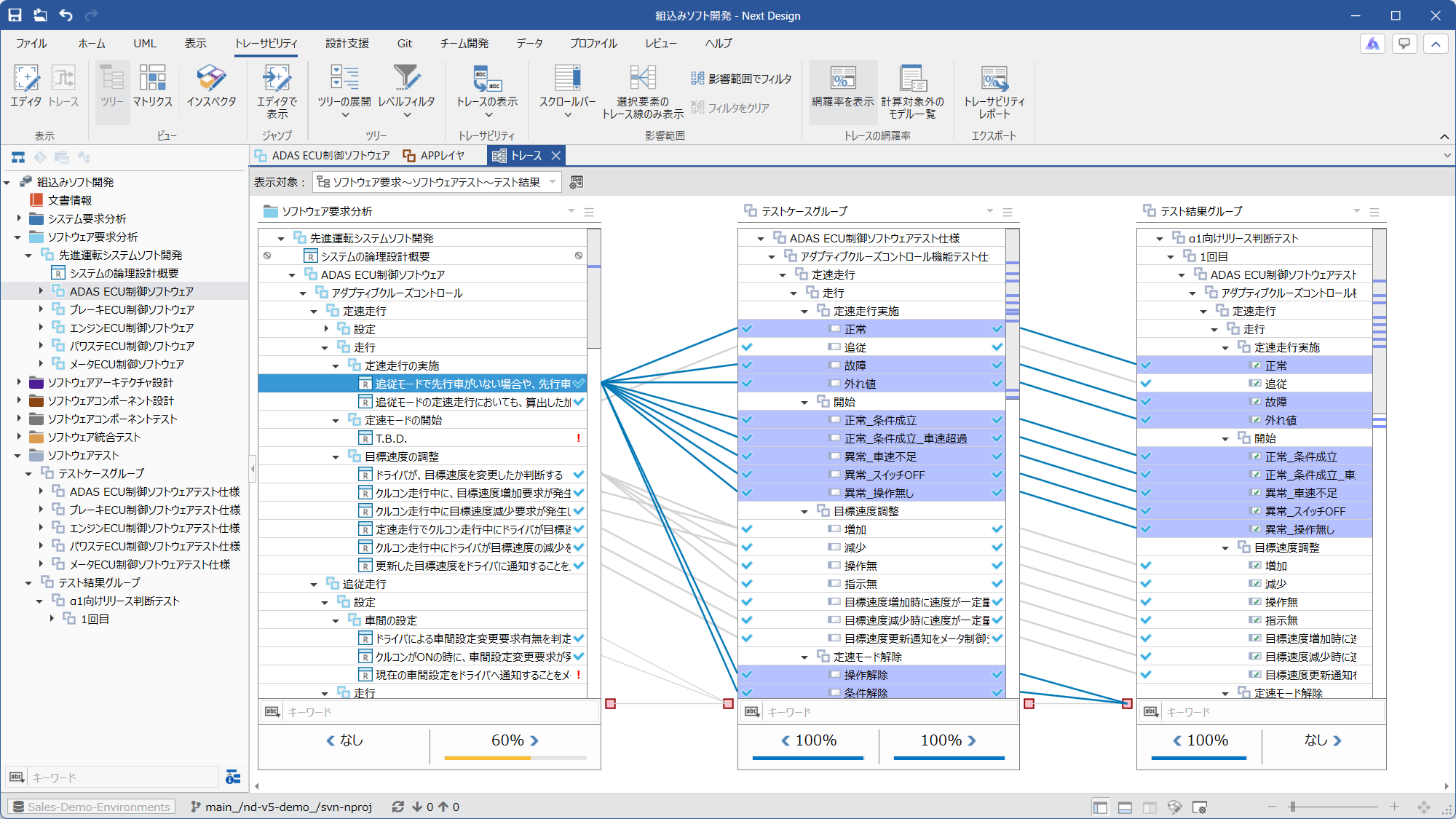
Bringing Process Assets to Your Development Environment
- Using Automotive-SPICE (*1)—a development process cultivated in the automotive industry—as a reference, we incorporated our own expertise. We have systematized V-model processes and deliverables as a base package that can be used immediately in embedded software development fields across any industry.
- The base package includes a set of metamodels (structural definitions) and view definitions (representation methods) required for digital transformation, allowing you to either use them as-is to start designing immediately or tailor them to your own processes and target domain for organizational deployment.
-
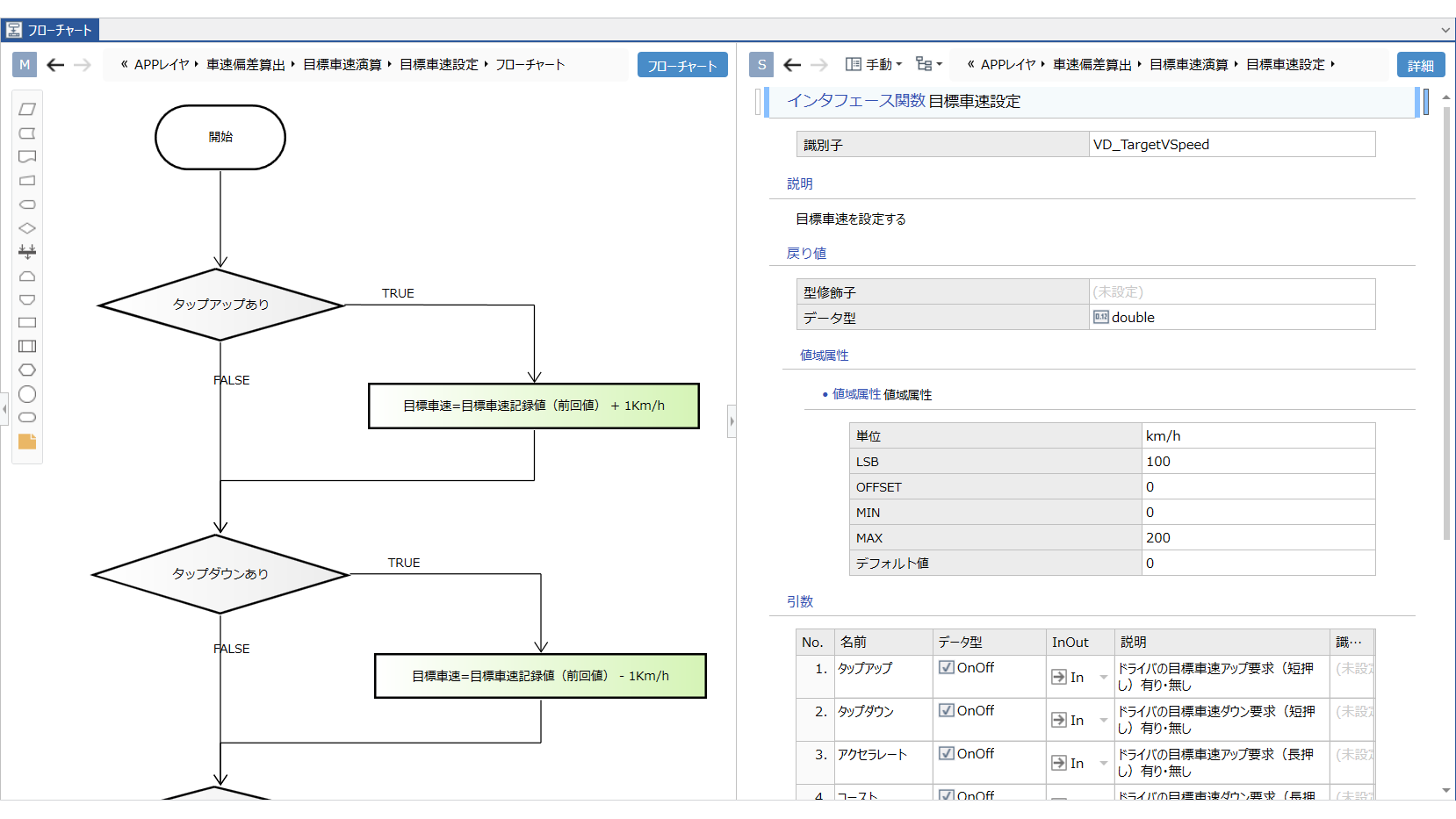
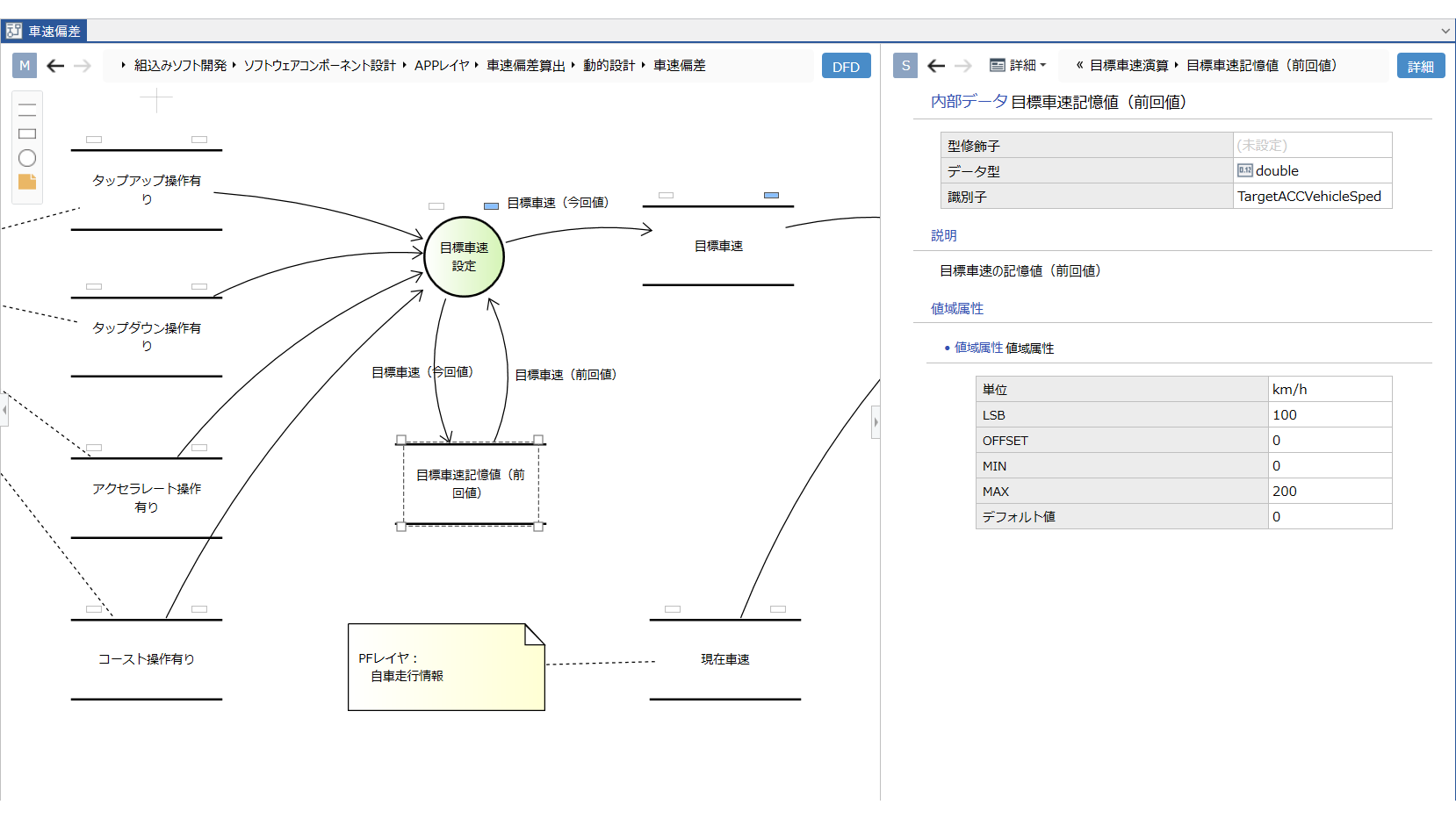
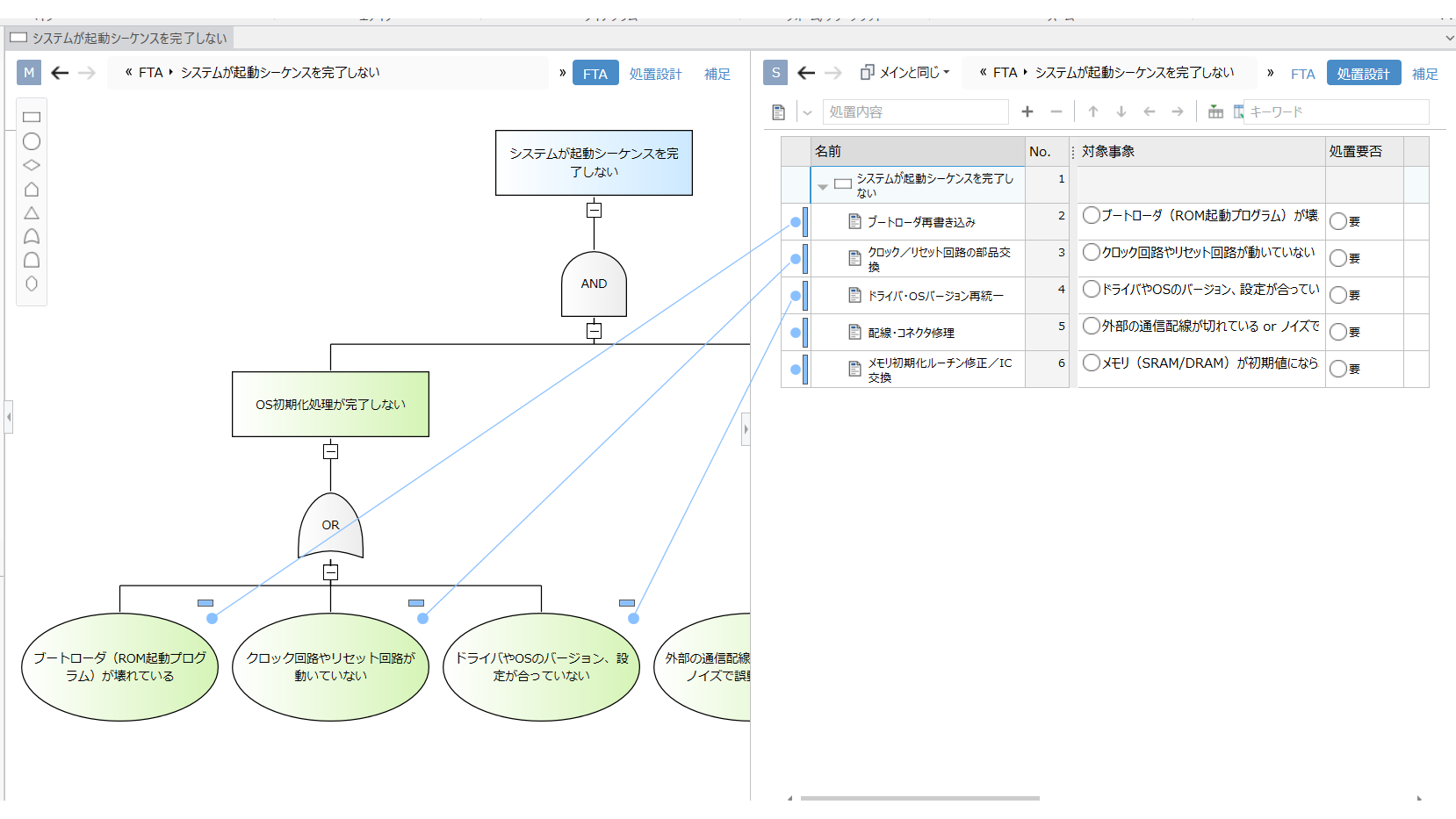
Standard design methods, ready to use
- In addition to conventional UML/SysML and timing charts, Next Design offers a lineup of packages featuring standard design methods such as flowcharts, DFD, FMEA, FTA, and USDM, ready for immediate use.
- Combine the optimal methods for each task—from requirements analysis to detailed design and failure analysis—and centrally manage all design information in a single tool.
- Design methods required in embedded software development can be used immediately by simply adding base packages or custom profiles.
-
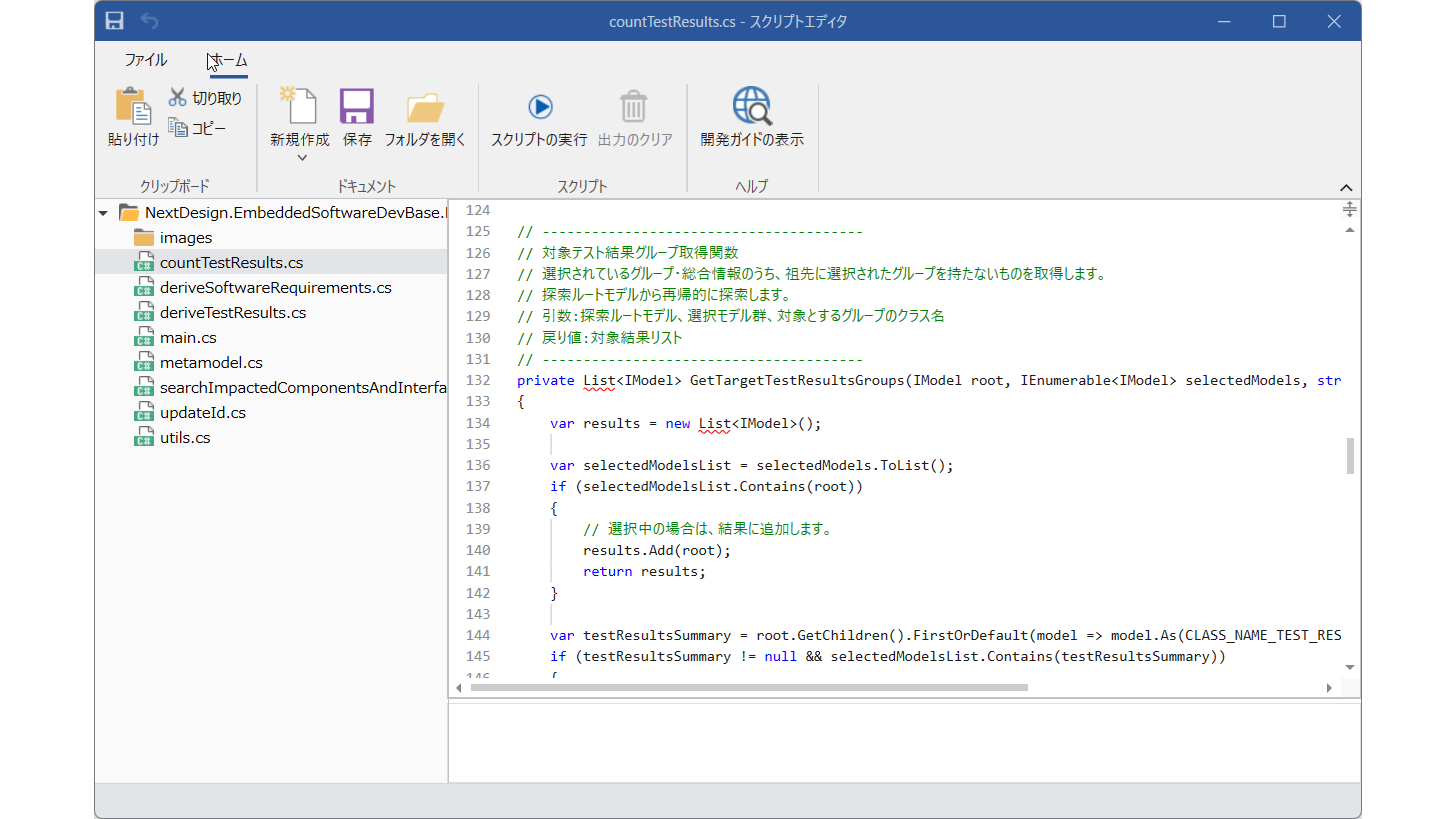
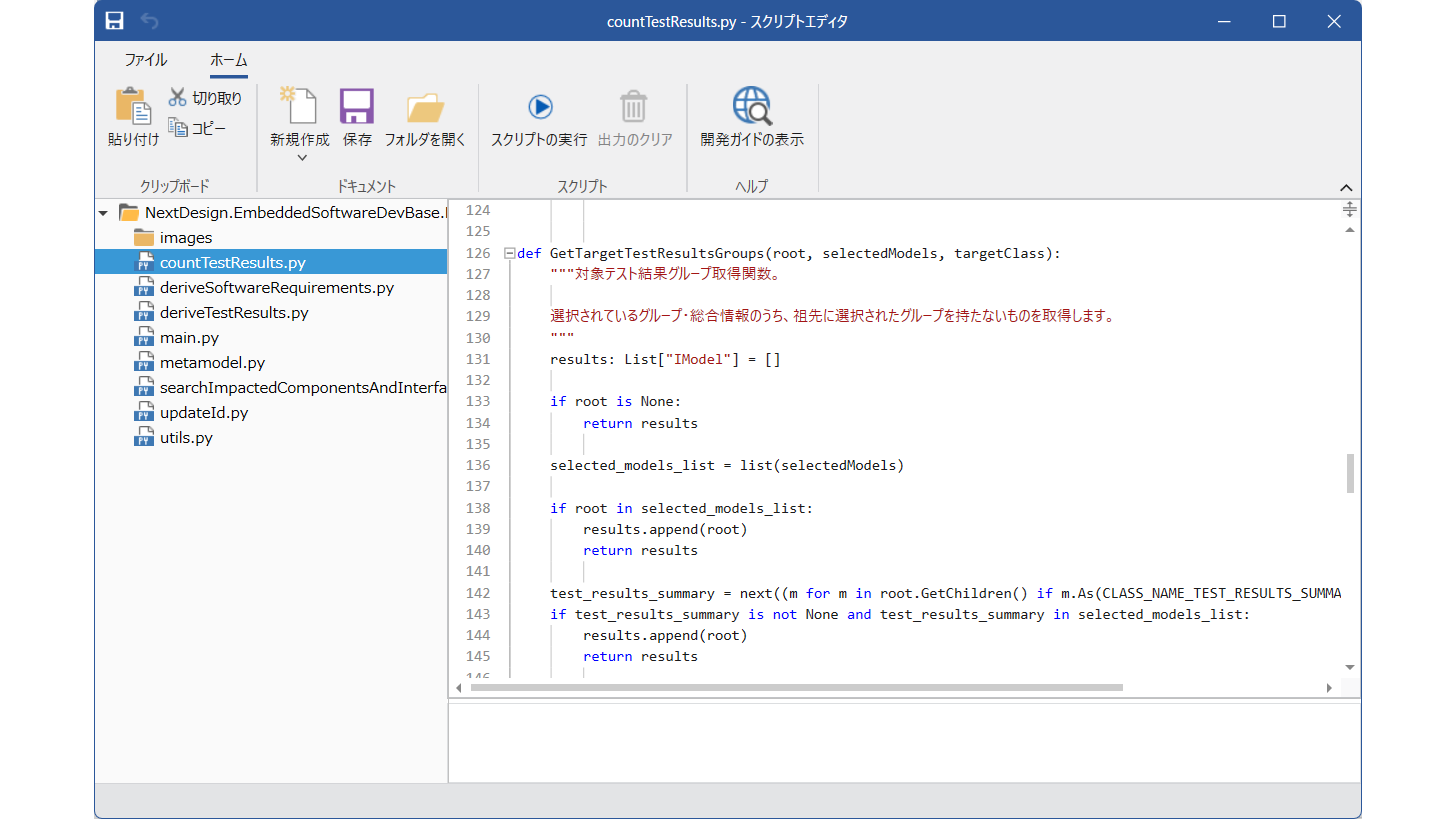
Streamline on-site operations with extensions
- The base package includes extensions that automate routine on-site tasks. You can immediately make use of features such as bulk model generation from upstream processes, continuous re-numbering of IDs, automatic extraction of impact ranges, and automatic aggregation of test results.
- These extensions are provided in script format, allowing them to be referenced as implementation examples or used as a foundation for further expansion.
- In addition to C#, which is widely used for extension development, Python is now also supported, empowering a broader range of engineers to leverage digital transformation-enabled design data and drive on-site improvements.
(*1) Automotive-SPICE is a registered trademark of Verband der Automobilindustrie e.V. (VDA). The provided packages reference Automotive-SPICE but do not guarantee compliance with it.
AI-Assisted design for efficient, high-quality embedded software development
Seamless AI integration with our proprietary AI agent platform "DC Agentiqs" (*2), which supports engineers across processes, powerfully assists with tasks that previously relied heavily on experienced personnel, such as designing leveraging on-site expertise, conducting design reviews based on specific viewpoints, and defining domain-specific profiles. The UI integrated directly into Next Design enables AI assistance across various design scenarios, boosting overall speed and quality in design activities.
-
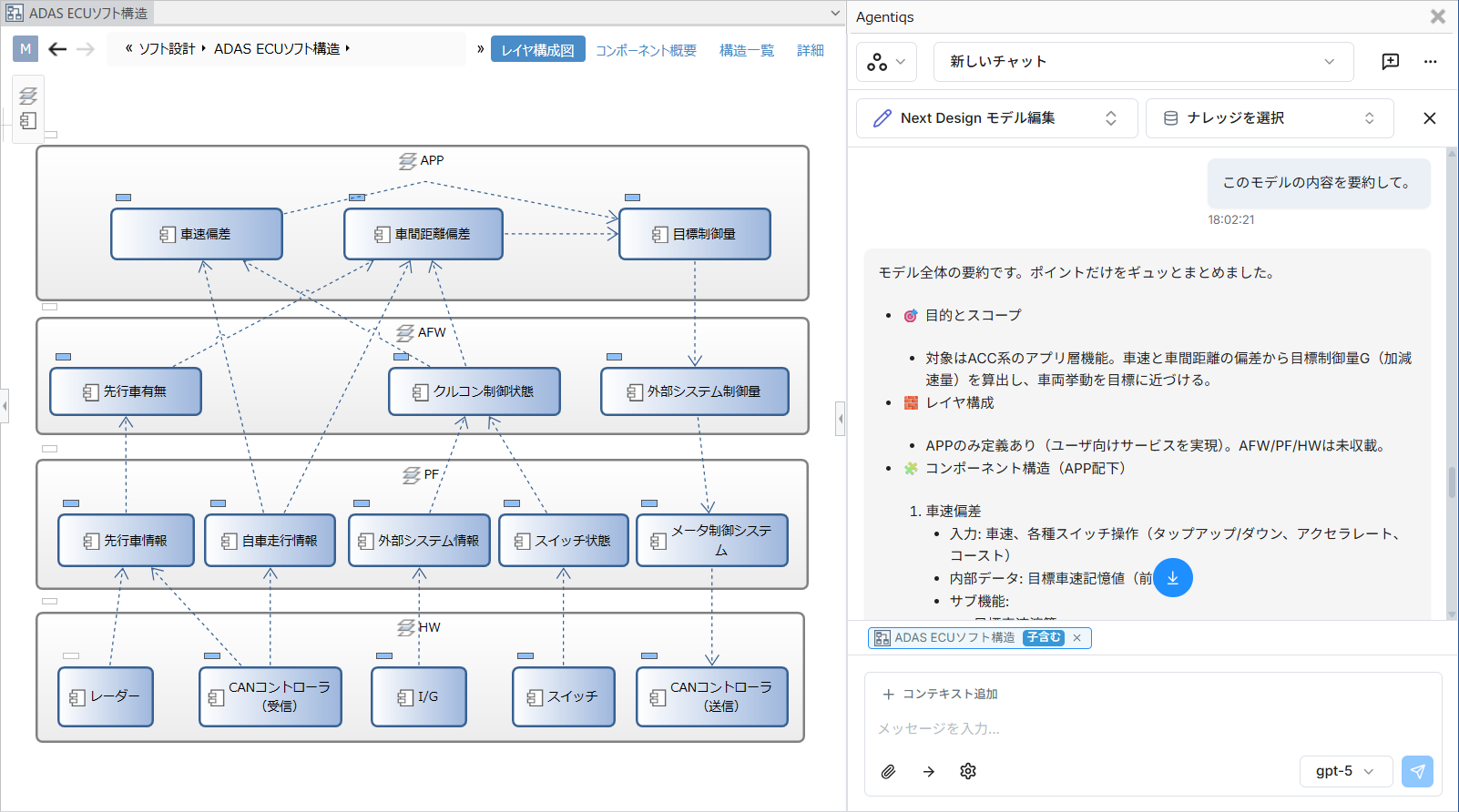
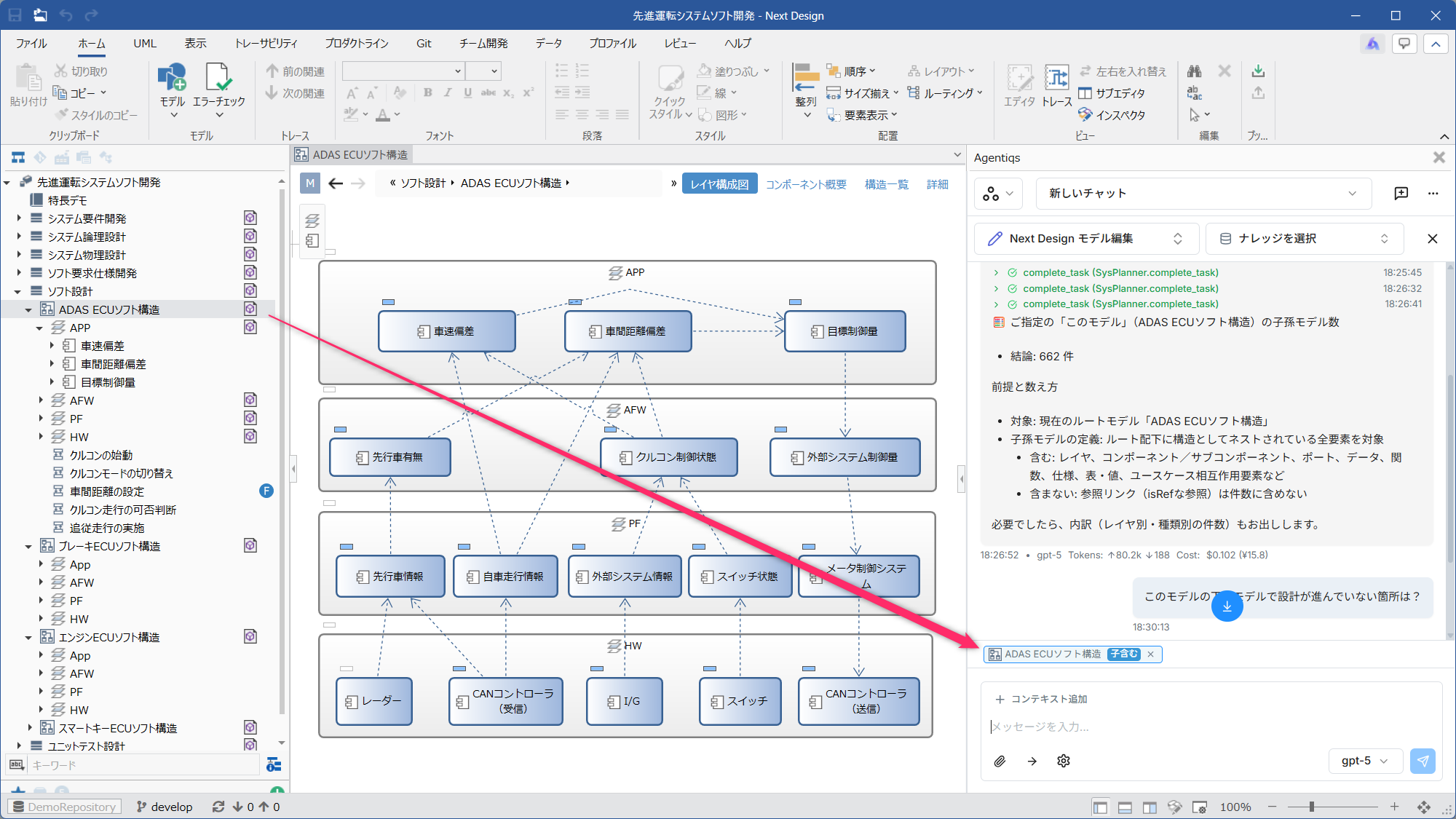
Seamless AI collaboration through a unified UI
- By integrating the DC Agentiqs chat window directly into the Next Design UI, you can utilize AI seamlessly during your daily design work without the hassle of switching tools.
- Models currently being edited by the user are automatically recognized as context by the AI integration feature. If you want the AI to reference specific models, you can simply add them via drag-and-drop to receive even more precise AI design assistance.
-
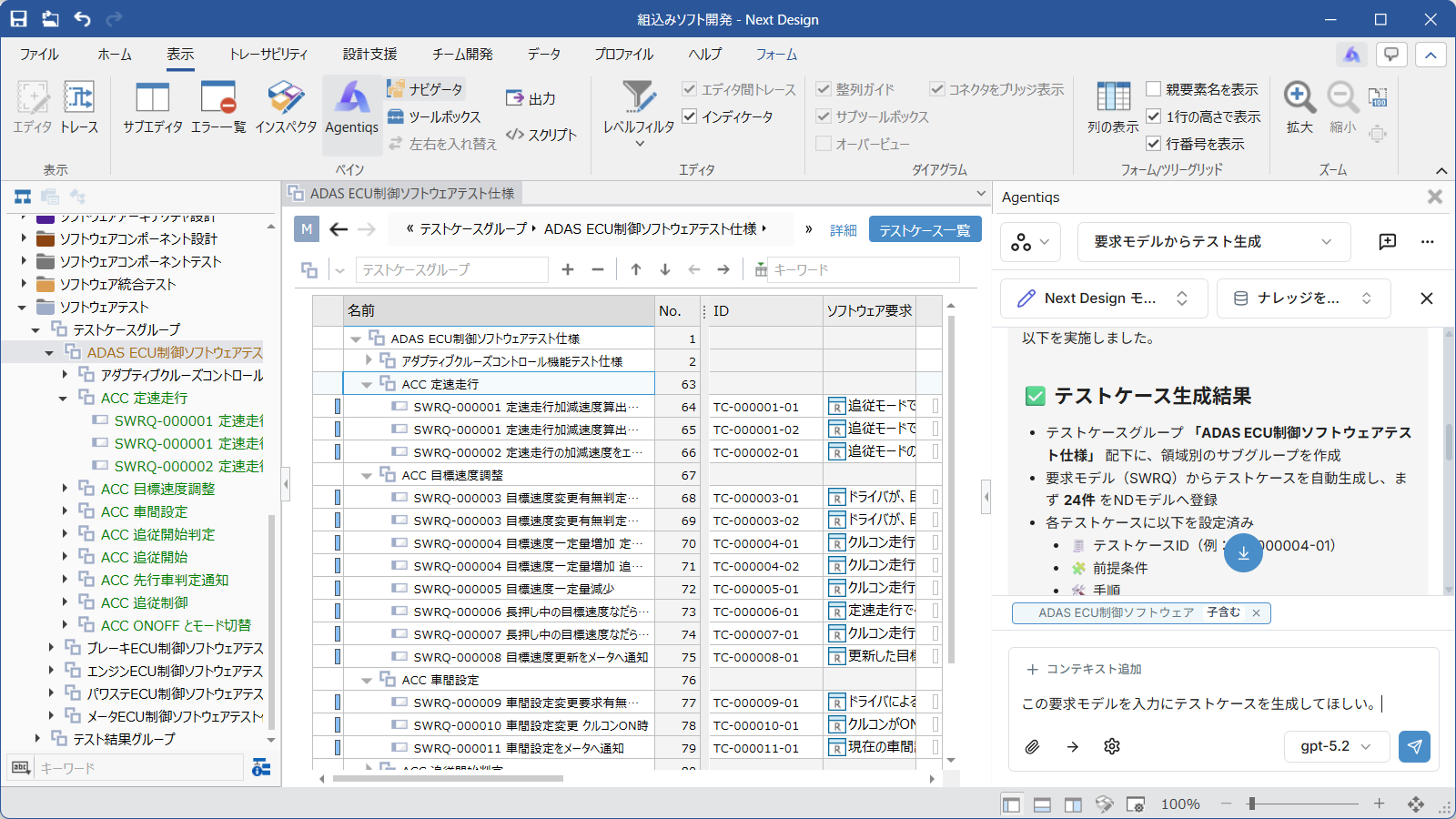
AI-powered support for design and reviews
- For instance, AI reads existing design documents and requirement specifications to automatically generate models such as use cases, scenarios, and test cases, thereby accelerating everything from design evaluation to test design.
- AI comprehensively checks design data within Next Design based on review perspectives and mandatory items, identifying omissions and inconsistencies to reduce design review oversights and drive quality improvements.
-
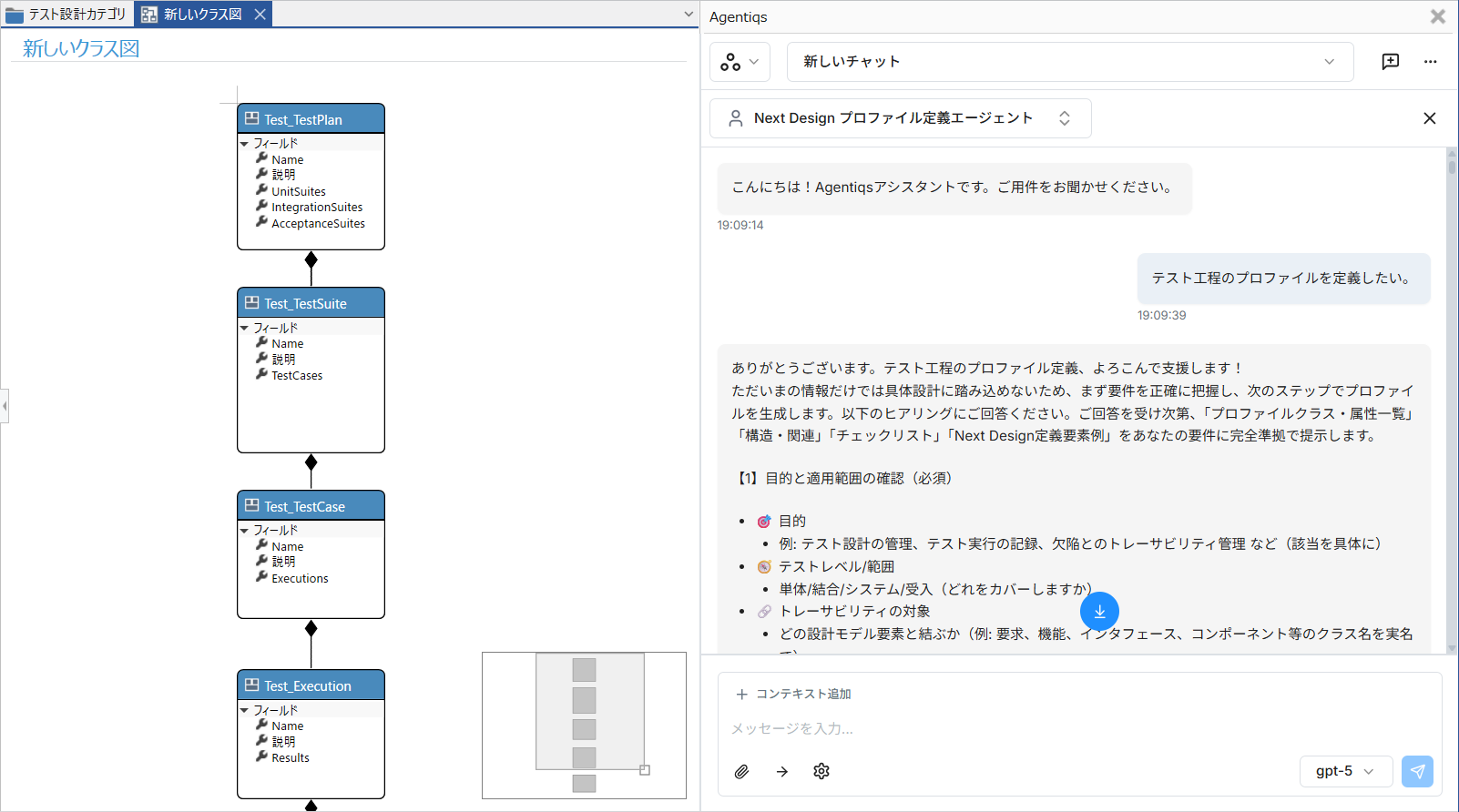
AI-assisted profile definition
- AI also supports reviewing design items in metamodels and reflecting them in view definitions, lowering the barrier for profile definitions that previously relied on experienced personnel and enabling the efficient definition of domain-specific profiles.
(*2) DC Agentiqs is an AI agent platform created to realize practical, full-scale AI utilization in development environments. "On-site specialized agents" integrate seamlessly with the development tools used on-site, creating deliverables just like an on-site engineer based on domain-specific knowledge and past deliverables. (Visit the product website for details)
Improving Practicality by Reflecting User Feedback
Based on extensive feedback from actual Next Design users, we have further enhanced usability and practicality.
Reflecting user input on frequent operations and external tool integration, we have polished every detail to elevate daily operational efficiency and comfort.
-
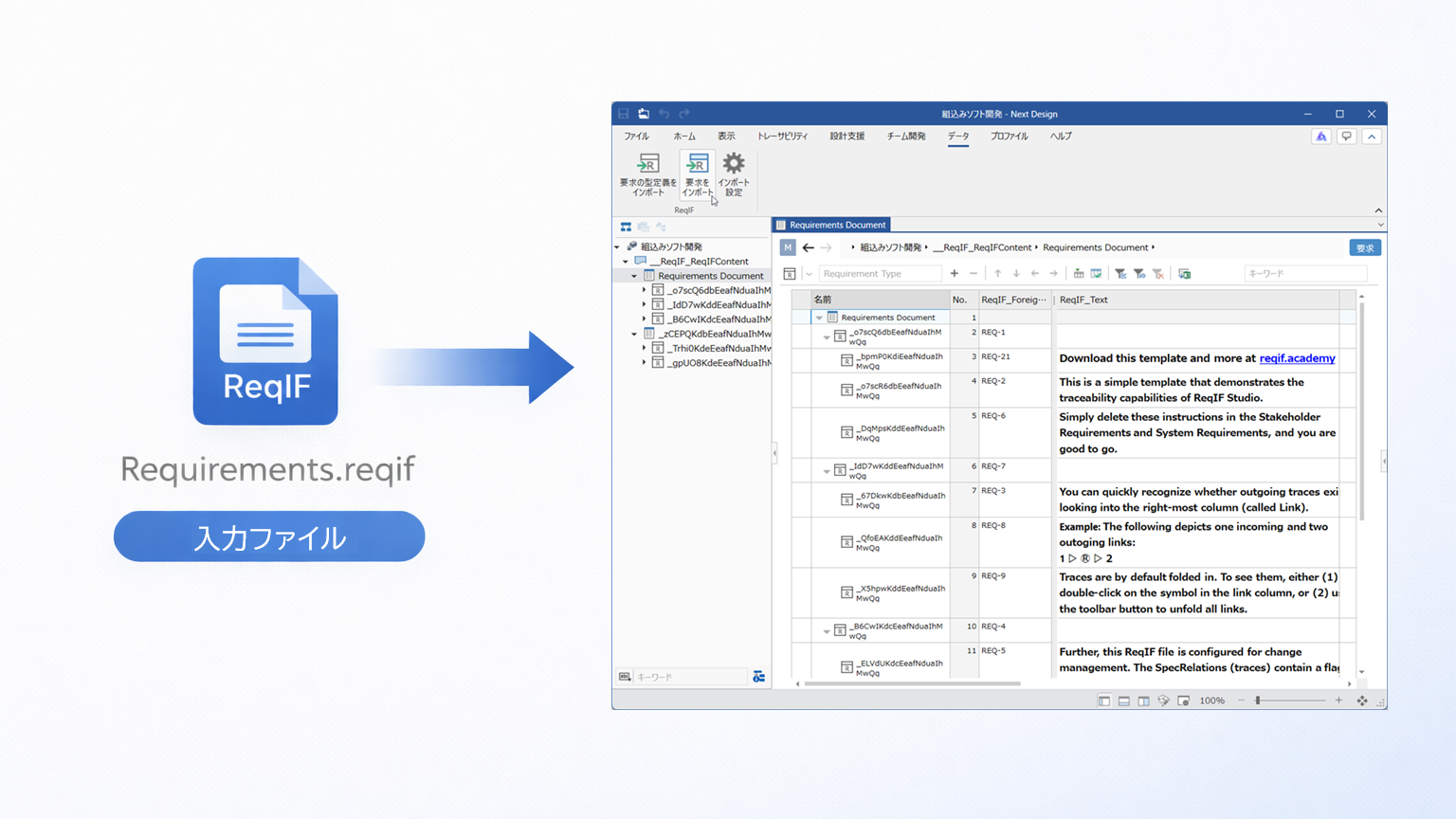
Effortlessly import customer requirements via ReqIF
- "ReqIF" is an international standard format for exchanging requirement information between tools. Customer requirements exported in ReqIF format from other compatible tools can be imported in batches, reducing transcription work and input errors for requirement specifications. Differences when requirements change can also be easily verified.
- By linking imported customer requirements and design models using trace information, the impact range of requirement changes can be identified quickly, mitigating the risks of rework and oversight.
- Type definitions included in import targets can be incorporated into your own profile with simple operations, allowing diverse ReqIF-format customer requirements to be smoothly integrated into the design workflow.
-
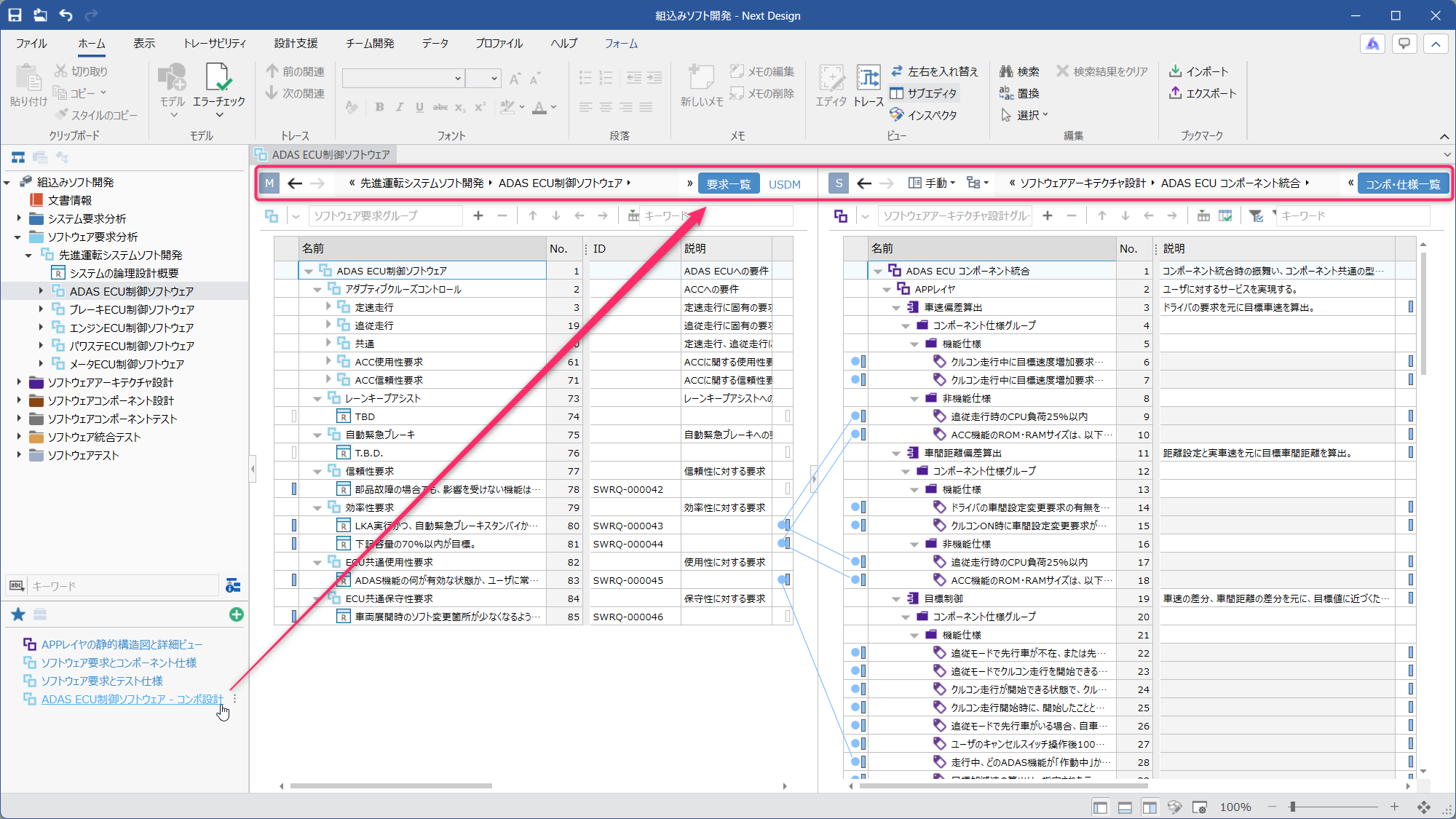
Bookmark frequently used display states for quick access
- By registering frequently used models and view configurations as bookmarks, you can instantly reproduce them in the main or sub-editor with a single click. For example, by registering a view configuration that places a requirements list side-by-side with a design model, you can quickly jump into daily editing work or reviews for each process.
- Bookmarks can be freely created by individual users and can also be shared with team members by exporting and importing them.
-
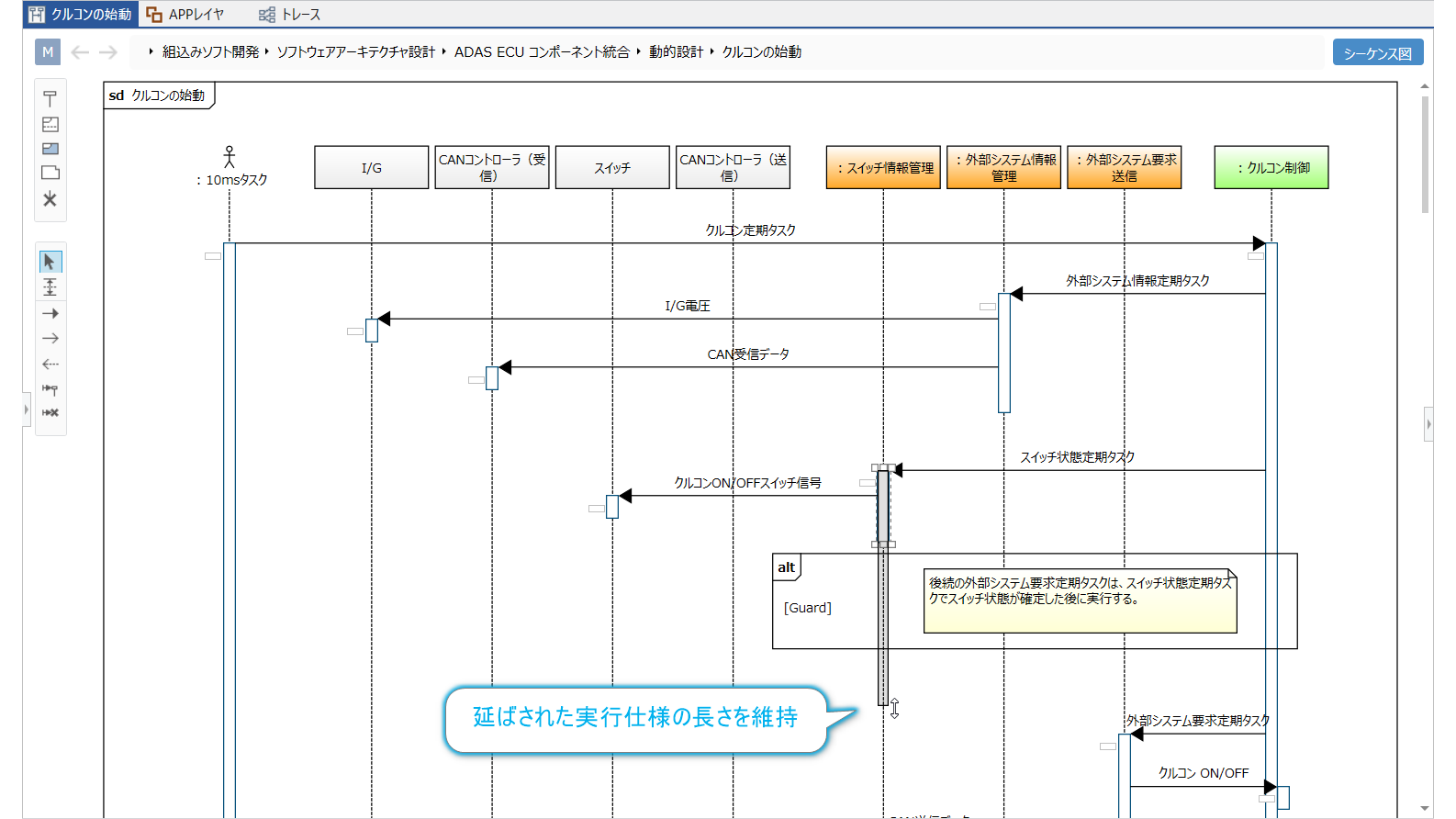
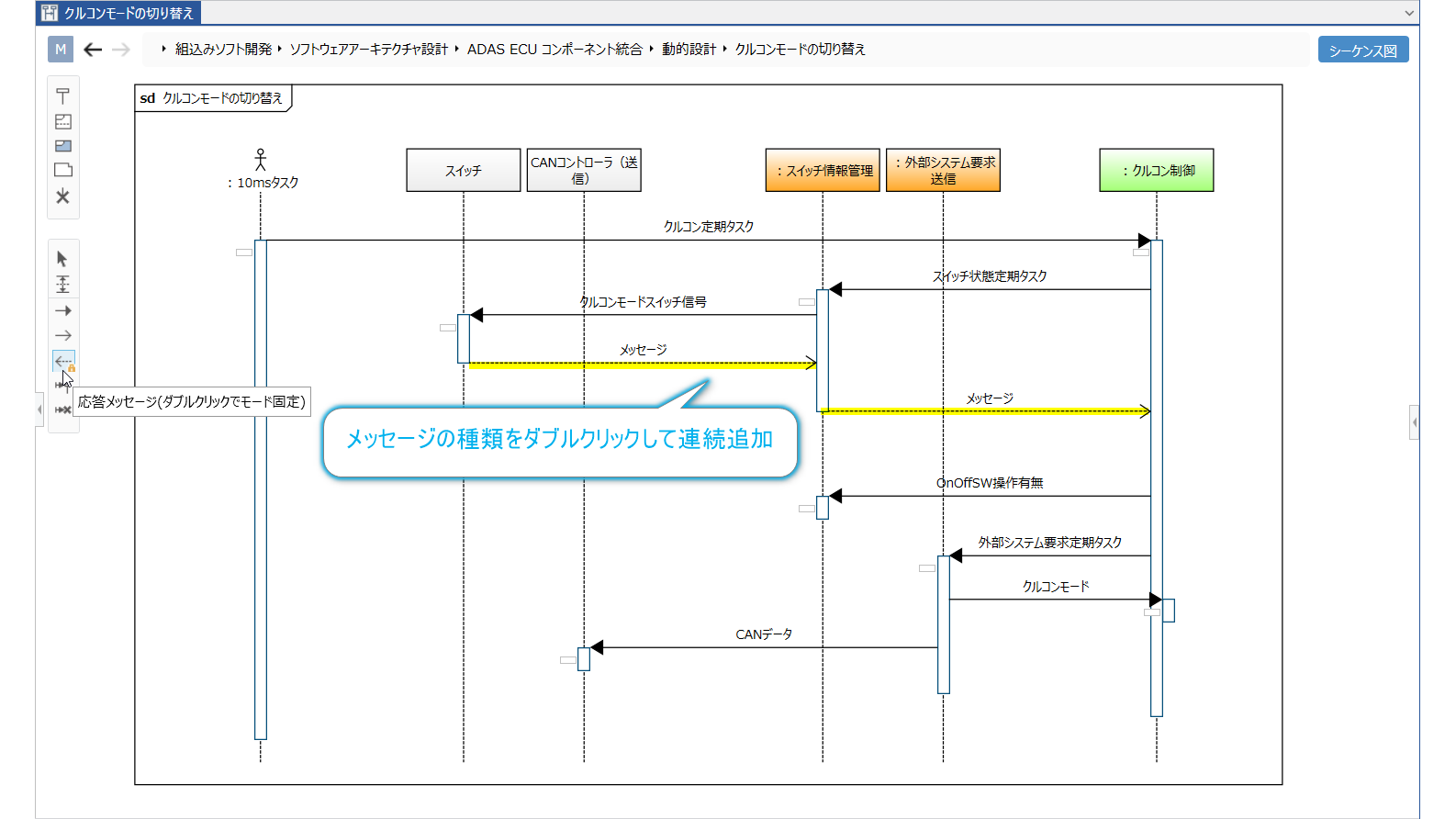
Significantly Improved Sequence Diagram Usability
- You can now edit while maintaining the length of execution specifications or move elements within a combined fragment all at once, enabling intuitive editing even in complex sequence diagrams.
- Since you can continuously add messages of the same type, you can edit sequence diagrams naturally, following the flow of messages.
-
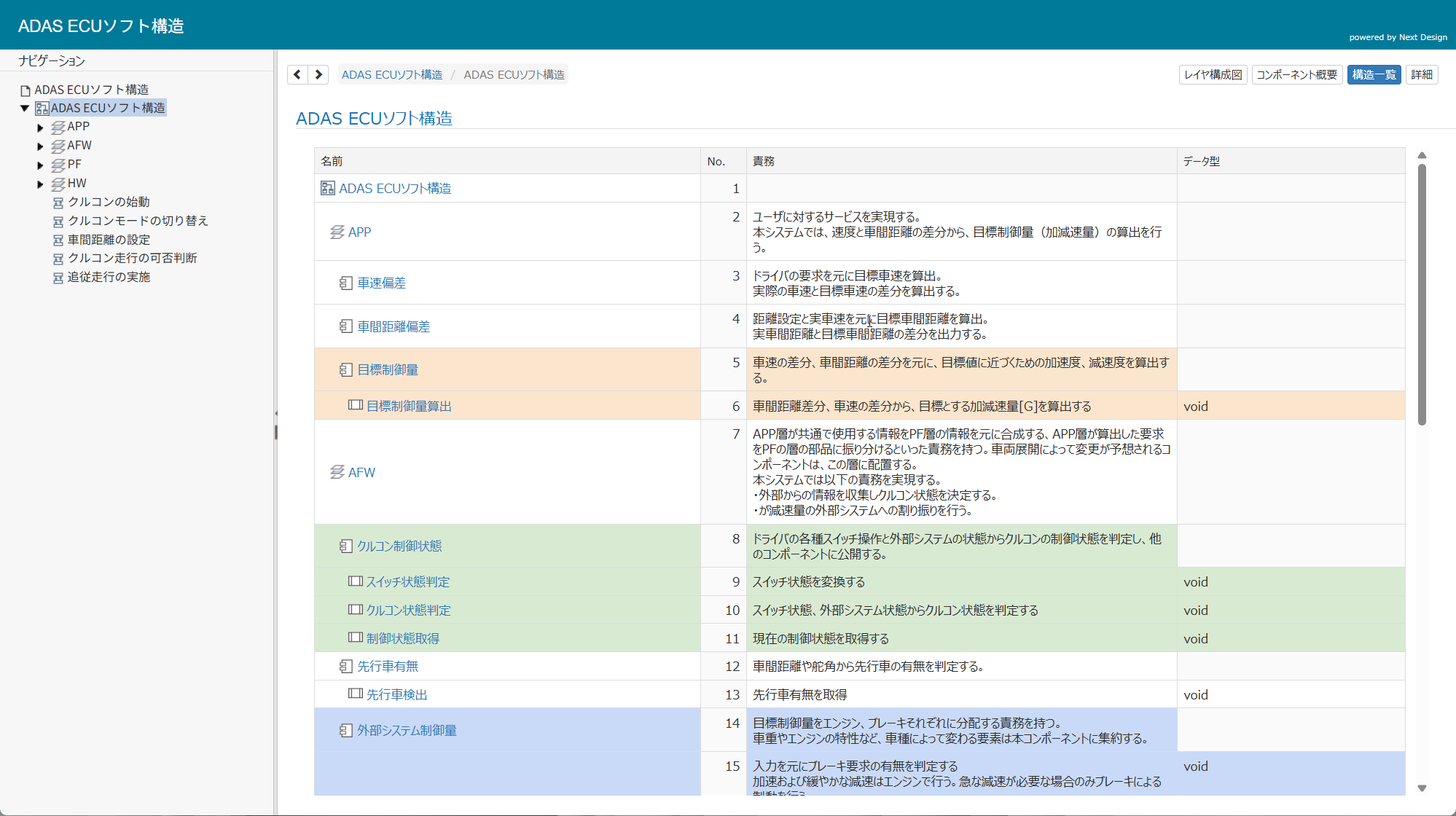
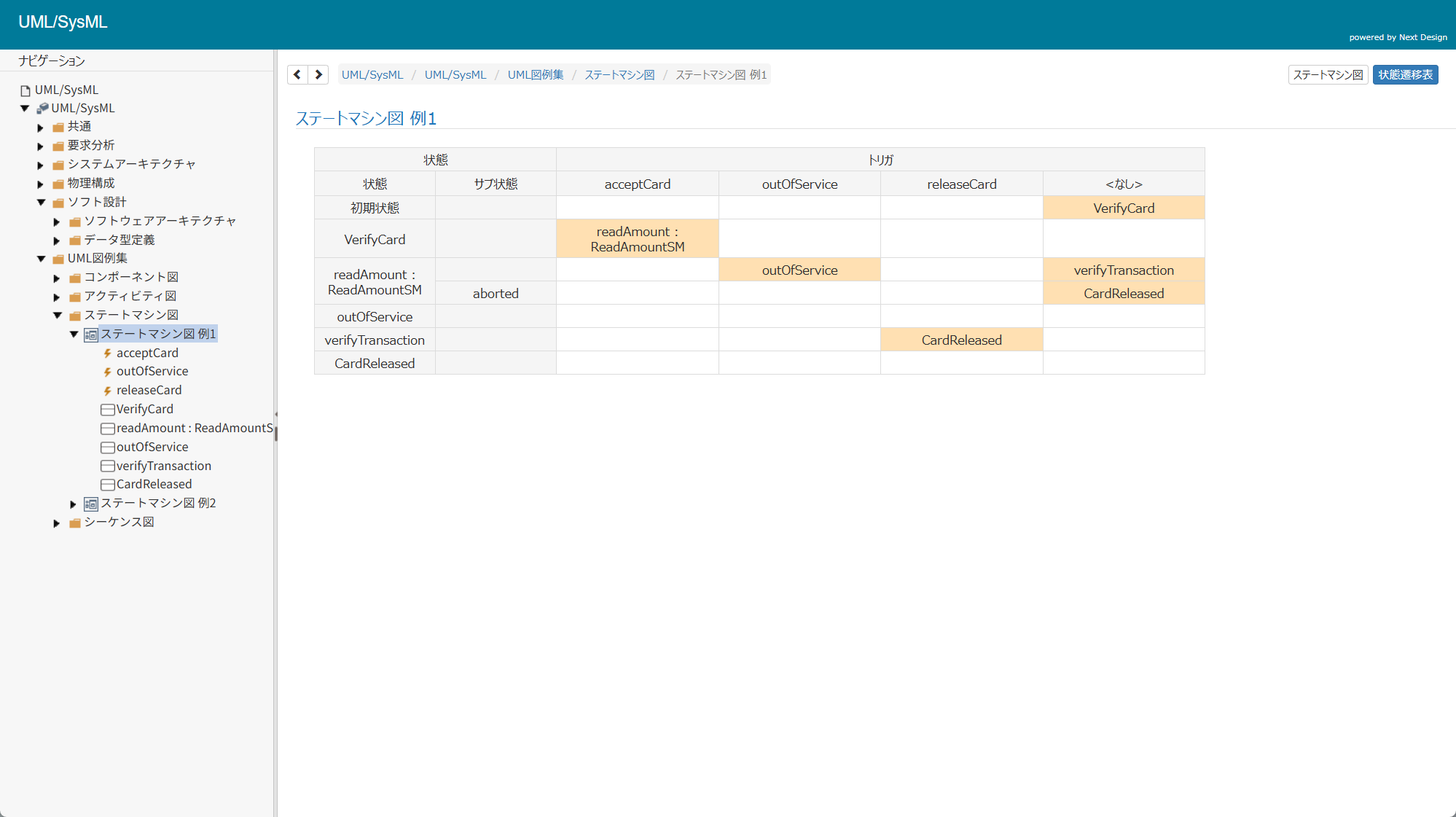
Enhanced Document Export Functions
- Table-format views, such as tree grids and state transition tables, are now supported for document export. This makes information sharing with external teams and the creation of evidence much smoother.
- Markdown editor view display is now also supported for document export. This allows you to leverage rich and flexible display content in your documents as well.
- Because document export targets can be configured on a per-view basis, even models with multiple views—such as those for reviews, overviews, or external distribution—allow you to generate documents excluding unnecessary views.
-
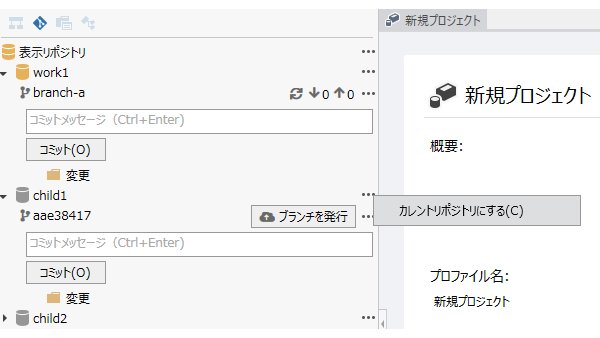
NDGit Submodule Support
- Multiple submodule-ized repositories are displayed side-by-side, allowing you to perform Git operations from a single screen. This enables direct operations from Next Design even in large-scale projects with split repositories.
- It also supports batch pull operations across multiple repositories, ensuring a stress-free experience even in environments composed of numerous repositories.
Other Improvements
-
.NET 10 Support
- The application framework has been updated to .NET 10, providing compatibility with the latest execution environment.
-
Performance Improvements
- We have reviewed the extension loading mechanism upon Next Design startup as well as the initial display processing of tree grids, reducing the waiting time before work can begin.